 Pin It
 The first time I made falafel from scratch, I was standing in a Middle Eastern market watching someone craft them with practiced hands, and I thought, how hard could this be? Turns out, everything changed when I discovered that dried chickpeas—not canned—were the secret. My kitchen filled with the most incredible aroma of cumin and cilantro sizzling in hot oil, and I bit into that first warm pita pocket and understood why this dish has been beloved for generations. What started as curiosity became a weeknight staple I crave constantly.
I remember bringing these to a potluck and watching people return for thirds, asking if they were from a restaurant—and the pride I felt saying I'd made them myself was worth every minute of prep work. My friend Sarah kept dipping them in the tahini sauce and saying "this changes everything," which is when I realized homemade falafel isn't just food, it's a conversation starter.
Ingredients
- Dried chickpeas (1 ½ cups, soaked overnight): Don't even think about using canned—the moisture ruins the texture you're after and you'll end up with a dense, heavy result instead of that cloud-like interior.
- Fresh parsley and cilantro (½ cup each): These aren't optional flavor boosters; they're what make the falafel taste alive and fresh rather than flat and one-dimensional.
- Ground cumin and coriander (1 tsp each): Toast these spices gently if you have them whole and grind them yourself—the aroma that fills your kitchen is worth the extra step.
- Baking powder (½ tsp): This tiny ingredient is the difference between dense and fluffy; don't skip it or increase it, or you'll lose that perfect golden exterior.
- All-purpose flour (2 tbsp): The glue that holds everything together, but use too much and you'll turn your falafel into hockey pucks.
- Tahini (½ cup): Grab the real stuff from the Middle Eastern or bulk section—the jarred convenience brands often separate weirdly and lack depth.
- Lemon juice (2 tbsp for sauce): Fresh lemon is non-negotiable here; bottled will leave a tinny aftertaste that ruins the whole experience.
- Vegetables for assembly (lettuce, tomatoes, cucumber, red onion): Freshness matters because these are your palate cleansers between bites of rich, satisfying falafel.
Tired of Takeout? 🥡
Get 10 meals you can make faster than delivery arrives. Seriously.
One email. No spam. Unsubscribe anytime.
Instructions
- Soak your chickpeas the night before:
- Drain them well and pat completely dry—any lingering moisture gets trapped in the food processor and you'll end up with a wet paste instead of a coarse crumble.
- Pulse everything into coarse texture:
- You want the mixture to hold together when you squeeze it but still feel grainy, not smooth like hummus; this is where most people go wrong by over-processing.
- Chill the mixture:
- This 30-minute rest lets the flavors meld and makes forming the balls infinitely easier, especially if your kitchen is warm.
- Heat oil to exactly the right temperature:
- 350°F is your sweet spot—too cool and they'll absorb oil and taste greasy, too hot and they'll burn outside while staying raw inside. Use a thermometer if you have one.
- Fry in batches without crowding:
- I learned this lesson by stuffing too many in at once and watching them stick together; give each ball space to develop that beautiful golden crust.
- Whisk the tahini sauce smooth:
- Add water slowly and keep whisking—this transforms thick paste into something that drapes beautifully over warm falafel without being watery.
- Assemble with warm pita:
- Cold pita is sad pita; warm bread cradles the still-hot falafel and brings everything together into something greater than the sum of its parts.
 Pin It
 There's a moment right when you pull golden falafel from the oil and bite into one while it's still steaming, and that's when it stops being a recipe and becomes something that feeds more than just hunger. My mom took one bite and said it reminded her of a street vendor in Beirut from her childhood, and suddenly this dish was carrying memory and love along with the chickpeas.
The Science Behind the Crispiness
What makes falafel crispy isn't magic—it's the maillard reaction happening at the surface while the baking powder creates steam pockets inside. When you chill the mixture, you're giving the baking powder time to distribute evenly, which means every falafel puffs and browns at the same rate rather than some being dense while others are hollow and burnt. The best batches happen when you respect the temperature and resist the urge to open the oil and peek constantly.
Building the Perfect Pita Pocket
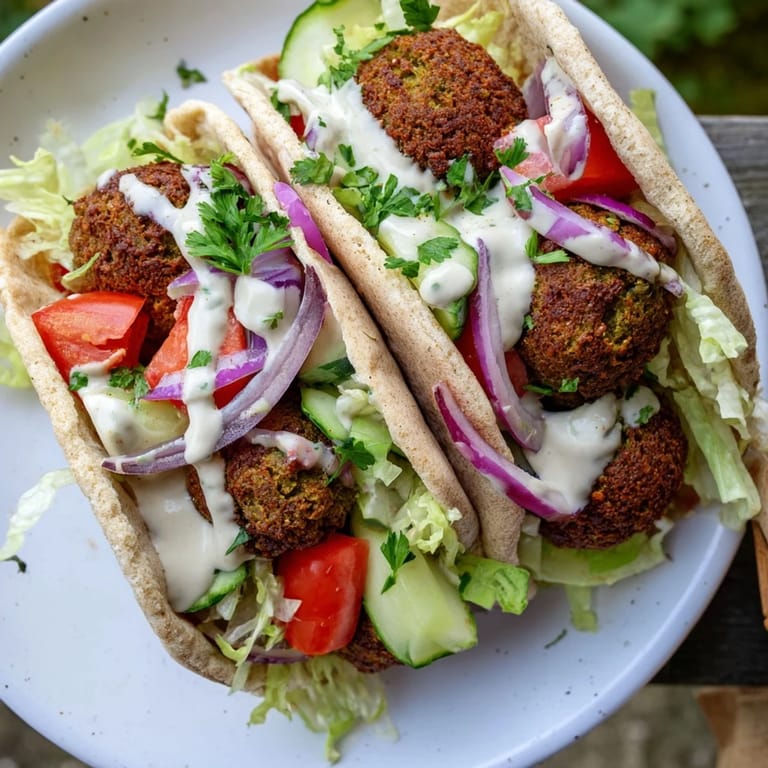
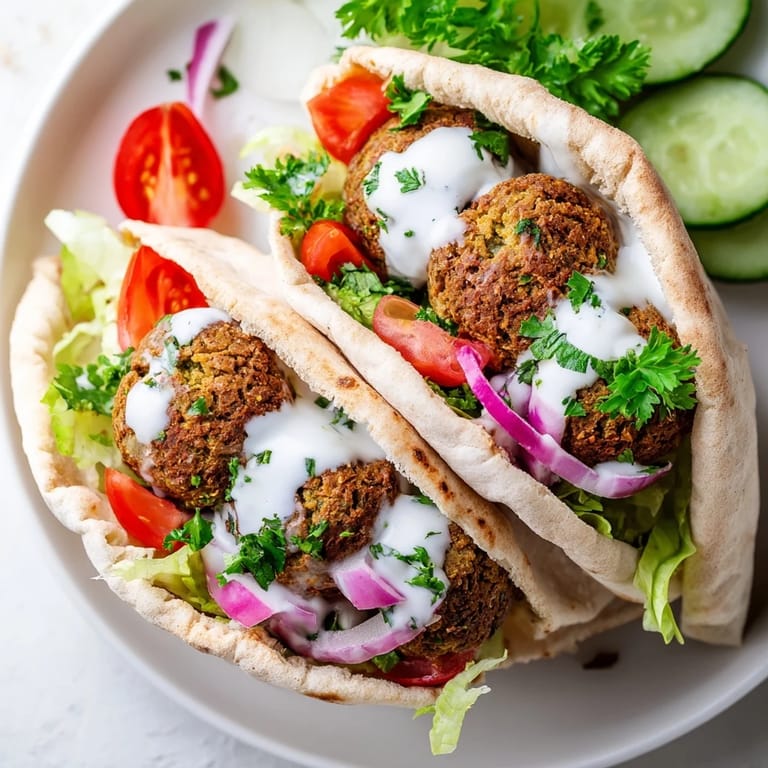
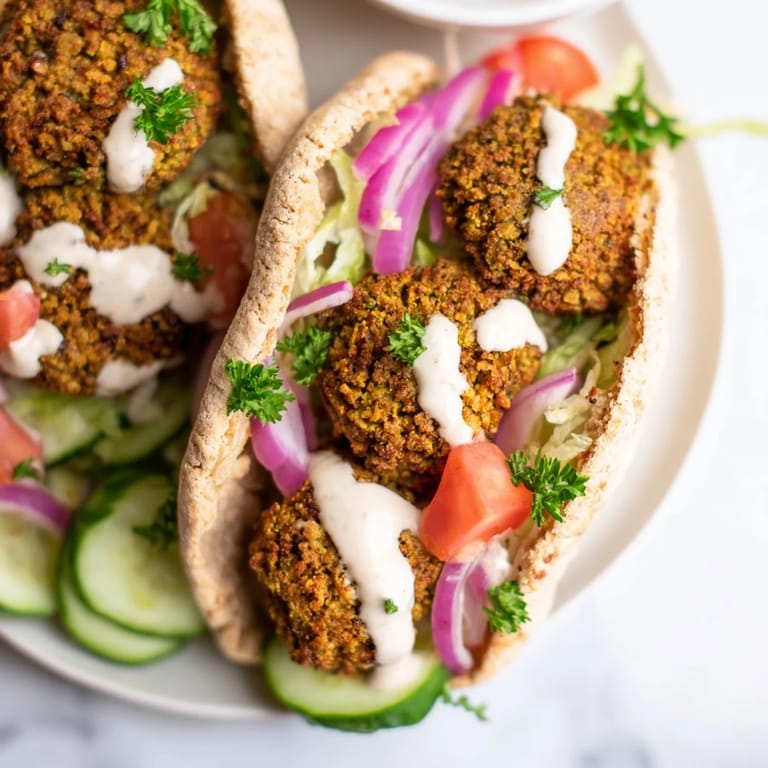
Assembling these is where texture and flavor come together like a conversation—crispy falafel meets cool, crisp lettuce, and the tahini sauce is your bridge between them. I layer lettuce first so it acts as a barrier preventing the warm falafel from making the bread soggy, then pile on tomatoes and cucumber, and tuck the falafel pieces in at angles so they don't all tumble out on the first bite. The red onion adds a sharp note that cuts through the richness, and fresh parsley is the final touch that makes you pause and savor what you've created.
Variations and Serving Ideas
Once you've mastered the basic version, you can dress these up in a hundred different ways depending on what you're craving or what's in your kitchen. I've added pickled turnips for that tart crunch, swapped in beet hummus for tahini sauce on nights I wanted something different, and stuffed them into regular bread when I ran out of pita. Some friends love theirs with hot sauce drizzled over everything, while others prefer a simple squeeze of fresh lemon and nothing else.
- Bake falafel at 400°F for 20–25 minutes turning halfway through if you want a lighter, less oily version that's still respectable.
- Make a double batch and freeze the uncooked balls on a tray, then fry straight from frozen adding just a minute or two to cooking time.
- Serve with hummus, baba ganoush, or even a simple cucumber yogurt sauce if tahini isn't calling to you that day.
 Pin It
 There's something deeply generous about making falafel for people—it says you cared enough to get your hands messy and stand by hot oil to feed them something real. Every time I make this, I'm reminded that the best recipes aren't just instructions, they're invitations to slow down and taste what happens when simple ingredients meet intention.
Recipe FAQs
- → How do you ensure falafel stays crispy?
Frying falafel in hot oil at around 350°F (175°C) helps create a crispy exterior. Draining them on paper towels removes excess oil, keeping them crisp longer.
- → Can falafel be baked instead of fried?
Yes, falafel can be baked at 400°F (200°C) for 20-25 minutes, turning halfway through for even browning, offering a lighter alternative.
- → What ingredients give falafel its flavor?
Fresh herbs like parsley and cilantro, combined with cumin, coriander, garlic, and onion, provide falafel’s distinctive, savory taste.
- → How is tahini sauce made smooth and creamy?
Whisking tahini with lemon juice, garlic, salt, and gradually adding cold water helps achieve a smooth, pourable consistency.
- → What are good vegetable toppings for pita pockets?
Shredded lettuce, diced tomatoes, sliced cucumber, and red onion add freshness and crunch that complement the falafel and tahini sauce.