 Pin It
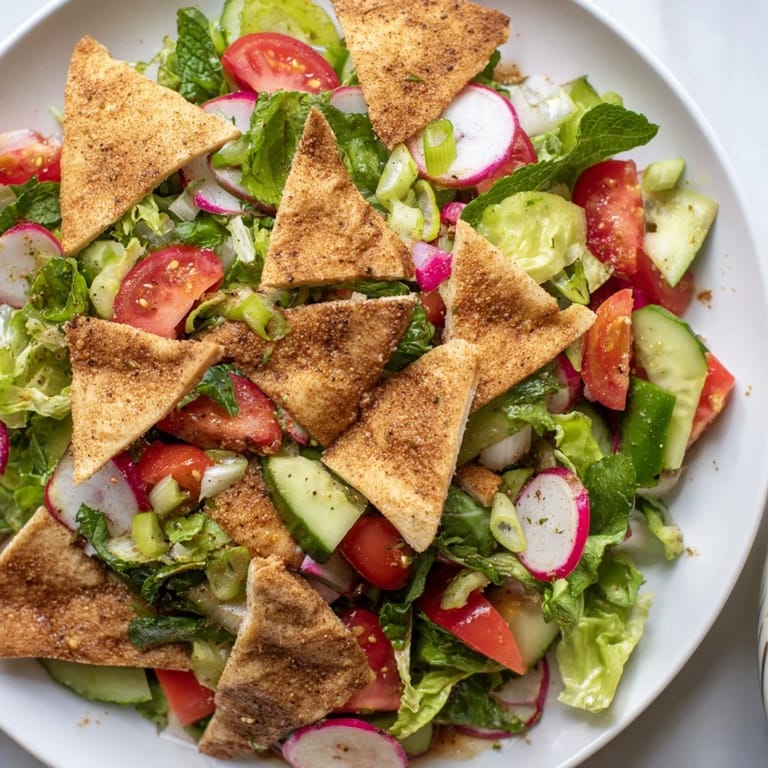
 There's something about the moment when you bite into fattoush for the first time that changes how you think about salad. I was at a small Lebanese restaurant tucked into a corner storefront, and what arrived at my table wasn't some delicate, forgettable bowl—it was vibrant, loud, and unapologetically crunchy. The pita chips shattered between my teeth while the sumac hit me with this unexpected brightness I couldn't quite name. I spent the whole meal chasing that flavor, and by the end, I knew I had to figure out how to recreate it at home.
The first time I made this for friends at a summer picnic, I was nervous about transporting it, so I packed everything separately and assembled it right there on a borrowed picnic table. Someone's kid ran by and knocked over my olive oil, which sounds like a disaster but actually taught me that you can go lighter on the dressing than you think and the salad still sings. That ruined-and-recovered moment became my favorite version of this recipe.
Ingredients
- Mixed greens (4 cups): Use whatever feels fresh—romaine gives you crisp structure, arugula brings peppery bite, spinach makes it earthier. The mix is where the salad gets its personality.
- Cherry tomatoes (1 cup, halved): Don't skip halving them; it helps the dressing coat them and they release their juice into the bowl.
- Cucumber (1, diced): Toss it with a pinch of salt a few minutes before assembling—it seasons itself and keeps things bright.
- Bell pepper (1, diced): Red or yellow both work, but yellow has this sweeter, gentler flavor that plays nicer with the sumac.
- Radishes (4, thinly sliced): They provide peppery crunch and won't get soggy like some vegetables do.
- Green onions (3, sliced): Use both the white and green parts—the white adds subtle onion flavor, the green gives you color and a lighter taste.
- Fresh parsley and mint (1/4 cup each, chopped): These are not optional. They're what make this taste like you've been to the Mediterranean and actually paid attention.
- Pita breads (2): Cut them into bite-sized pieces—not too small or they'll disappear, not too big or you'll feel like you're eating pita chips instead of salad.
- Olive oil (for chips: 2 tbsp, for dressing: 1/4 cup): Use the better stuff for the dressing where you can taste it; the chips don't care as much.
- Sumac (1/2 tsp for chips, 1 tsp for dressing): This is the soul of the dish—it's tangy, slightly astringent, and makes everything taste more interesting.
- Sea salt and black pepper: Taste as you go; everyone's hand is slightly different.
- Lemon juice (2 tbsp) and red wine vinegar (1 tbsp): The lemon is bright and essential, the vinegar adds depth and helps the dressing stick around longer.
- Garlic (1 clove, minced): Raw garlic can be sharp, so go light—you want it to whisper, not shout.
Tired of Takeout? 🥡
Get 10 meals you can make faster than delivery arrives. Seriously.
One email. No spam. Unsubscribe anytime.
Instructions
- Toast your pita chips:
- Preheat the oven to 375°F. Toss your pita pieces with olive oil, sea salt, and sumac until everything is evenly coated—this is easier than you'd think if you use your hands. Spread them on a baking sheet and bake for 8 to 10 minutes, giving them a shake or flip halfway through so they brown evenly and don't burn on one side. You'll smell them toasting, and that's your signal to keep checking—they go from golden to burnt faster than you'd expect.
- Build your dressing:
- In a small bowl, whisk together the olive oil, lemon juice, red wine vinegar, sumac, minced garlic, salt, and pepper. The dressing should taste bright and slightly sharp—if it feels mellow, you probably need more lemon juice or a tiny pinch more sumac. It's ready when it tastes like you want to put it on everything.
- Assemble the greens:
- In a large bowl, combine all your chopped and sliced vegetables and herbs—the greens, tomatoes, cucumber, bell pepper, radishes, green onions, parsley, and mint. If you do this even a few minutes before serving, the salad will start to wilt slightly, which is actually fine because the dressing needs something to cling to. Mix everything together gently with your hands if you want to keep things from breaking.
- Dress and finish:
- Drizzle the dressing over the salad and toss it gently, letting the dressing coat every leaf. This is the moment where everything comes together—you'll see the colors brighten and the whole bowl will smell incredible. Top with the pita chips right before serving, because once they hit the dressing they start their slow surrender to sogginess.
 Pin It
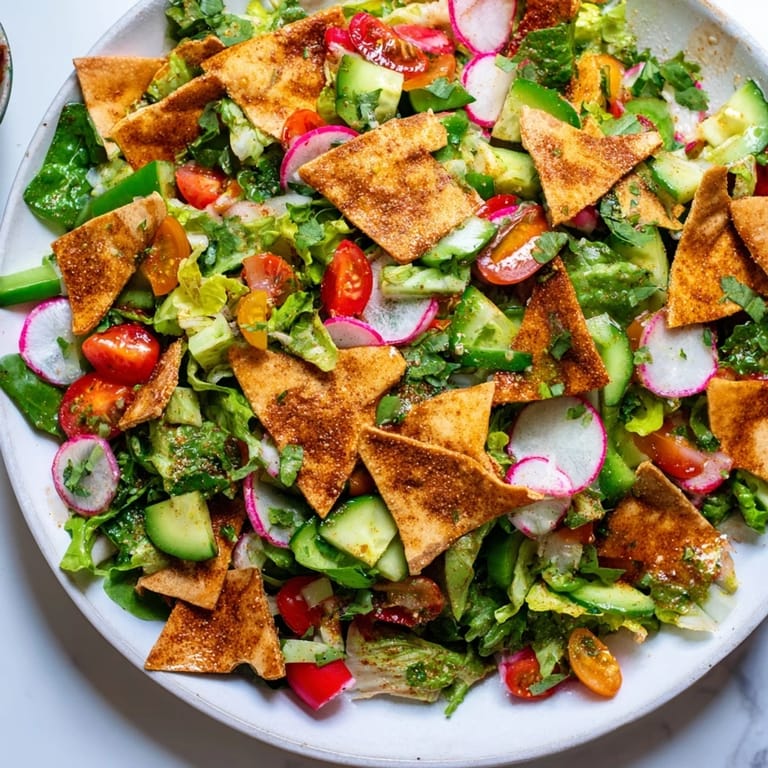
 There's a moment when someone tries this for the first time and their eyes widen because of that sumac—that tart, slightly floral note they didn't know they were missing. It reminds me that sometimes the best food isn't complicated, it's just a few things in conversation with each other, each one allowing the others to shine.
Why Sumac Is the Secret
Sumac shows up in Middle Eastern cooking for a reason—it brings tartness without needing another squeeze of lemon or lime, and it has this subtle complexity that makes people pause mid-bite and ask what that flavor is. It's lemony and slightly floral, with a tiny hint of astringency that keeps your palate awake. Once you realize how much you like it, you'll find yourself adding it to everything from roasted vegetables to plain yogurt, and suddenly your whole cooking perspective shifts.
The Ritual of Assembling Fresh Salads
There's something grounding about chopping vegetables by hand for a salad like this. You're not in a rush, you're not trying to achieve perfection, you're just moving through the steps and getting to know your ingredients. I find myself actually paying attention—noticing which tomatoes smell the sweetest, discovering a cucumber that's still warm from being in the sun, remembering why I love cooking in the first place. It's the kind of food that reminds you that sometimes the kitchen is less about creating a finished dish and more about the few minutes of quiet focus before everyone arrives.
Building Flavor and Texture
Fattoush lives and dies on contrast—the crunch of the pita chips against tender greens, the sweetness of the tomatoes against the sharpness of the sumac, the coolness of everything against the slight bite of raw garlic in the dressing. When you're chopping and mixing, you're actually orchestrating a conversation between textures and tastes. That's what makes this salad feel more sophisticated than its simplicity suggests, and why it works as both a light lunch and a substantial side for heavier mains.
- Don't chop the herbs until right before you're ready to serve—they oxidize and lose their brightness if they sit around.
- If you're making this ahead for a picnic or packed lunch, keep the dressing and chips completely separate and assemble just before eating.
- Taste the dressing on its own before you dress the salad—this one moment of checking saves you from a bland bowl.
 Pin It
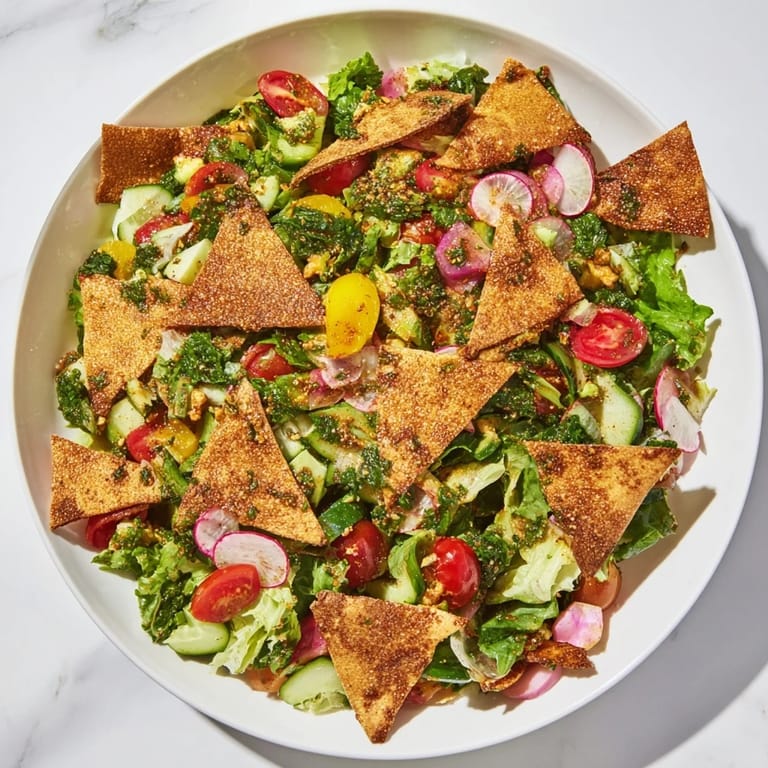
 This salad is proof that sometimes the best meals are the ones where every component is allowed to be exactly what it is. Serve it cold, eat it fresh, and don't apologize for something so simple and honest.
Recipe FAQs
- → What is sumac and how does it affect the salad?
Sumac is a tangy, lemony spice common in Middle Eastern cooking that adds a bright, acidic note enhancing the salad's flavor.
- → Can I make the pita chips gluten-free?
Yes, you can substitute regular pita bread with gluten-free pita or omit pita chips altogether to suit gluten-free needs.
- → How do I keep pita chips crunchy?
Bake pita pieces until golden and crispy, and add them to the salad just before serving to maintain their crunch.
- → What herbs complement this salad best?
Fresh parsley and mint are used for their bright, fresh flavors that balance the tangy dressing and crunchy elements.
- → Can this salad be prepared ahead of time?
Vegetables and dressing can be mixed in advance, but add pita chips shortly before serving to prevent sogginess.
- → What dressing ingredients create the tangy flavor?
The dressing combines olive oil, lemon juice, red wine vinegar, garlic, ground sumac, salt, and pepper for a zesty finish.