 Pin It
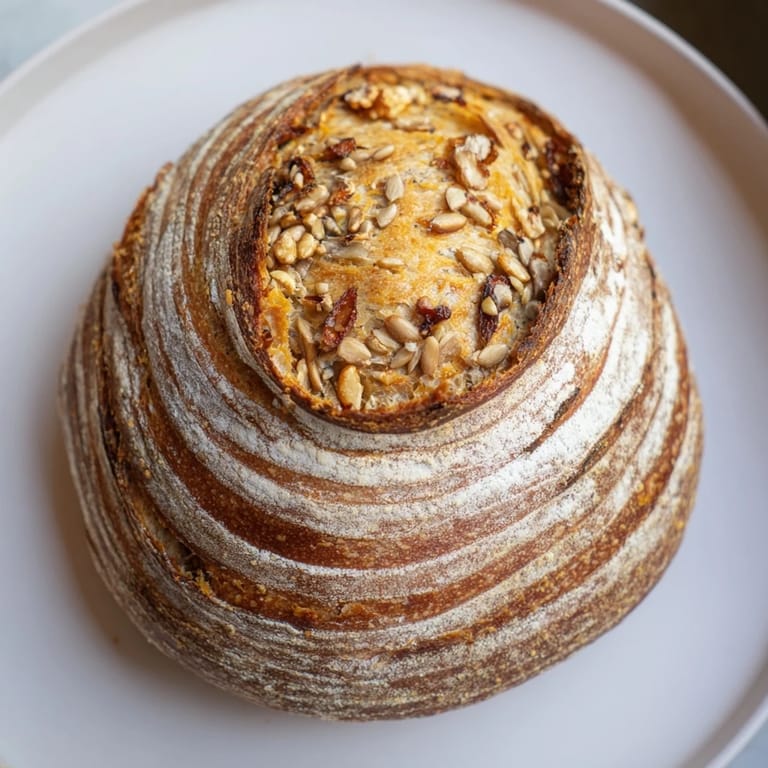
 I'll never forget the afternoon I discovered the Fibonacci spiral in nature while kneading bread. My daughter had left a nautilus shell on the kitchen counter, and as I was working through the dough, I noticed the same perfect mathematical curve in how the gluten was developing. That moment sparked an idea: what if I could bake that spiral directly into a loaf? What started as a playful thought became an obsession. After weeks of experimenting, I finally created this bread, where each ring grows larger and richer, just like nature intended. Now, whenever I shape this loaf, I feel that same sense of wonder.
I baked this for my partner's birthday breakfast, and watching their face light up when they saw the spiral still perfectly visible on that golden crust made every hour of waiting worthwhile. They called it the most beautiful thing they'd ever eaten, and honestly, I understood exactly what they meant.
Ingredients
- Strong bread flour, 500 g: This is your foundation, chosen for its higher protein content which creates that beautiful, chewy structure. I learned to weigh it rather than scoop it because those extra grams make all the difference in how the dough develops.
- Water, 350 ml lukewarm: Temperature matters more than you'd think—warm enough to wake up the yeast, but cool enough not to kill it. I always test it on my inner wrist first, like checking a baby's bath.
- Sourdough starter (active), 100 g or instant yeast, 7 g: If you have a starter, use it—the slow fermentation creates depth and complexity. If you're using commercial yeast, you'll get there faster, and that's perfectly fine too.
- Fine sea salt, 10 g: This isn't just for flavor; it strengthens the gluten network and controls fermentation speed. Don't skip it or rush past it.
- Olive oil, 15 ml: A gentle oil that enriches without overwhelming, helping the dough stay tender through its long rise.
- Toasted sunflower seeds, 20 g: The smallest addition, starting our spiral journey. Toasting them yourself unlocks their nuttiest character.
- Chopped walnuts, 30 g: Each ring grows bigger, each ingredient bolder. The walnuts bring earthiness and crunch that develops as you spiral outward.
- Pumpkin seeds, 40 g: Their slight mineral quality balances the richness that's building with each layer.
- Grated hard cheese, 50 g: Gruyère or Parmesan—something aged that won't melt into nothing. This is where savory richness enters the picture.
- Sun-dried tomatoes, 60 g chopped and drained: These must be drained thoroughly or they'll make your dough soggy. A lesson I learned the sticky way.
- Mixed olives, 70 g pitted and chopped: The pivot point where sweet and savory dance together. Choose ones you'd actually eat on their own.
- Sautéed spinach, 80 g well-drained: The final, richest layer. Sauté it, then squeeze it dry in a clean kitchen towel—this step is non-negotiable if you want a tender crumb.
Tired of Takeout? 🥡
Get 10 meals you can make faster than delivery arrives. Seriously.
One email. No spam. Unsubscribe anytime.
Instructions
- Start with patience and a prayer:
- Combine your flour and water in a large bowl, stirring just until everything is moistened and shaggy. There will be dry bits, and that's exactly right. Cover this bowl and walk away for 30 minutes. This rest, called an autolyse, is where the flour begins to fully hydrate and gluten starts forming on its own. You're not working; the dough is doing the work for you.
- Bring it to life:
- After that rest, scatter your starter (or yeast) over the top, along with the salt and olive oil. Now mix with your hand or a sturdy wooden spoon, turning the bowl and folding the dough over itself until everything is incorporated. It will be sticky—don't panic. This stickiness is a sign of good hydration and will eventually become silky.
- Knead with intention:
- Turn the dough onto a lightly floured surface and knead for 8 to 10 minutes. Feel how it changes under your hands, becoming smoother and more elastic with each fold. You're not trying to make it perfect; you're waking up the gluten and building strength. When you can stretch a small piece thin enough to see light through it without tearing, you're there.
- Let time do its magic:
- Oil a bowl, nestle your dough inside, and cover it loosely with a cloth or plastic wrap. Leave it at room temperature for 8 to 12 hours. This long, slow rise is where flavor develops, where the starter or yeast quietly transforms simple ingredients into something alive. Peek at it every few hours if you must, but try not to disturb it. You're looking for it to roughly double in size.
- Divide your canvas:
- Turn your risen dough onto a floured surface and divide it into 7 equal portions. A kitchen scale helps here, but even without one, you can eyeball it. These seven pieces will become seven spirals, each one a different expression of texture and taste.
- Build the spiral, layer by layer:
- This is where the magic happens and where your patience becomes art. Take the first portion (smallest) and gently knead the toasted sunflower seeds into it, distributing them evenly. Then move to the second piece and knead in the walnuts, then the third with pumpkin seeds, continuing through each ingredient in order: cheese, sun-dried tomatoes, olives, and finally spinach in the seventh and largest piece. Each time, you're not violently incorporating—you're gently folding and turning, coaxing the additions to stay put.
- Shape into ropes:
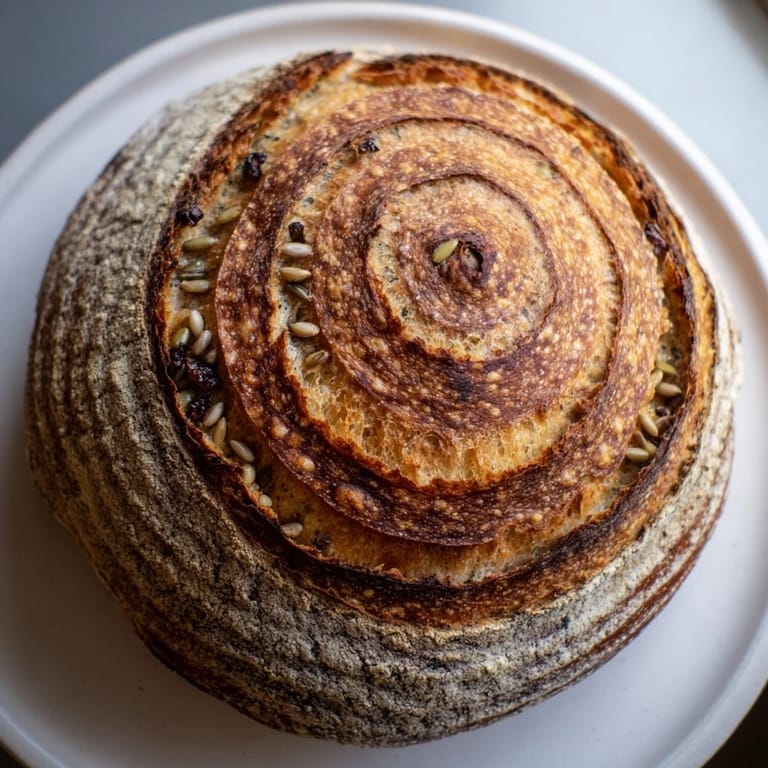
- One by one, roll each portion into a rope about as thick as your thumb. Start with the smallest (sunflower seed) rope. On a parchment-lined baking sheet, coil this rope around a central point, forming the tiniest spiral. Press the end into the coil to seal it. Then take your walnut rope and coil it around the first spiral, slightly larger. Continue this way, each spiral wrapping around the last, each one slightly bigger, until your final spinach rope crowns the whole creation. This is your Fibonacci spiral, edible and alive.
- Let it rise one more time:
- Cover your spiral loosely and let it sit for about 1.5 hours until it looks puffy and giggles when you gently poke it. You're not looking for double again—just a gentle rise that shows the yeast is still awake.
- Prepare for the oven's heat:
- Preheat your oven to 230°C (445°F) and place an empty baking tray on the bottom rack. This tray will catch water and create steam, which gives you that crackling, gorgeous crust.
- Score with intention:
- Dust the top of your spiral lightly with flour. Using a very sharp blade (a lame if you have one, a clean razor blade, or even a very sharp knife), make slashes that follow the spiral's curve. These cuts allow the bread to expand without cracking unexpectedly and create those beautiful ears.
- Introduce steam and heat:
- Carefully pour a cup of hot water into that waiting tray at the oven's bottom. The hiss and immediate steam tells you your crust is about to become something special. Quickly place your bread in the oven and close the door.
- Bake with faith:
- Let it bake for 40 minutes total, rotating the baking sheet halfway through so it bakes evenly. You're looking for deep golden-brown color and a crust that sounds hollow when you tap the bottom. The whole kitchen will smell like a bakery—this is the reward for waiting.
- Cool with discipline:
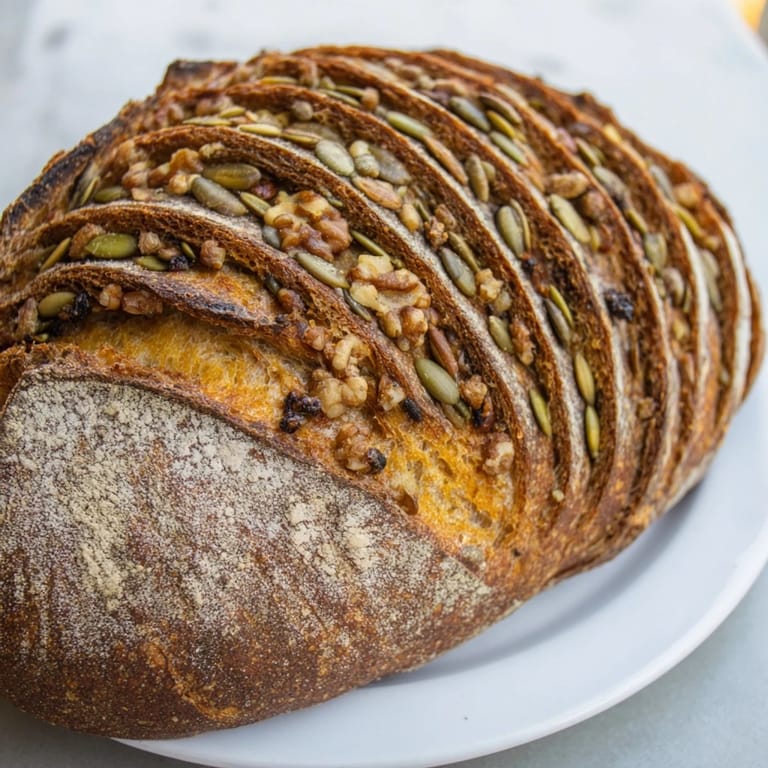
- When it's golden and stunning, transfer it to a cooling rack. This is the hardest part: you must let it cool completely before slicing. As it cools, the crumb sets properly. If you cut it warm, you'll tear the structure. But once it's cool, when you finally cut into it, you'll see each perfect spiral, each layer visible, a record of everything you built.
 Pin It
 My neighbor tasted this bread and cried. Not because she was emotional, but because she said it tasted like the kind of thing you'd remember forever. That's when I realized this wasn't just about impressing people with something beautiful—it was about creating a memory they could taste.
The Mathematics of Flavor
The Fibonacci sequence appears everywhere in nature—in shells, in flower petals, in the spirals of galaxies. What makes it work here is that it's not just visual. Each spiral adds a different flavor note, and they build on each other in a way that feels natural and balanced. The smallest, most delicate sunflower seeds give way to richer nuts, then to the umami of cheese and the brightness of tomatoes, and finally to the earthy depth of spinach. It's like composing a song where each note knows exactly where it belongs.
Fermentation as Ritual
There's something meditative about building this bread. The first rest teaches patience. The long rise teaches faith—faith that invisible organisms are working on your behalf, transforming simple ingredients into something with depth and soul. Every time I make this, I'm reminded that the best things in life require time, and that rushing through creates something fundamentally different. It's not better or worse; it's just not the same.
Variations and Endless Possibilities
Once you understand the structure, you can make this bread your own. Want to use roasted garlic instead of sun-dried tomatoes? Go ahead. Swap in pine nuts for walnuts? The Fibonacci sequence will still work its magic. I've made versions with roasted red peppers, with crispy pancetta, with toasted hazelnuts and dried figs. Each one has taught me something new about balance and flavor. The framework stays the same; the ingredient symphony changes.
- For a completely vegan version, use nutritional yeast or miso paste instead of cheese for that umami depth
- Toast your nuts and seeds just before using them for maximum flavor and freshness
- If you're making this for someone with allergies, you can substitute almost anything as long as you keep the spiral structure—the mathematics is what makes it magic, not any single ingredient
 Pin It
 This bread is more than just flour and water and time. It's a conversation between you and the yeast, between mathematics and flavor, between patience and reward. When you pull it from the oven, gleaming and golden, you've created something that didn't exist before—something that will nourish the people you love.
Recipe FAQs
- → What is the significance of the Fibonacci spiral in this loaf?
The spiral guides the shape and ingredient distribution, increasing density per segment to create a visually appealing and texturally varied bread.
- → How is the dough prepared for the layered segments?
After initial mixing and rising, the dough is divided into seven portions, each kneaded with different ingredients like seeds, nuts, cheese, and vegetables before being coiled together.
- → Can this loaf be made vegan?
Yes, by omitting the cheese or substituting it with a plant-based alternative, the loaf can be adapted to a vegan version.
- → What are the key steps to ensure a good crust?
Dusting the loaf with flour, slashing the spiral lines, and adding steam during baking help create a crisp and golden crust.
- → How long should the dough rise before baking?
The dough undergoes a long first rise of 8–12 hours, followed by shaping and a final rise of 1.5 hours to develop structure and flavor.
- → What tools are recommended for shaping and baking?
Using a large bowl, dough scraper, parchment paper, a baking sheet, and a sharp blade for scoring yields the best results when forming and baking the loaf.