 Pin It
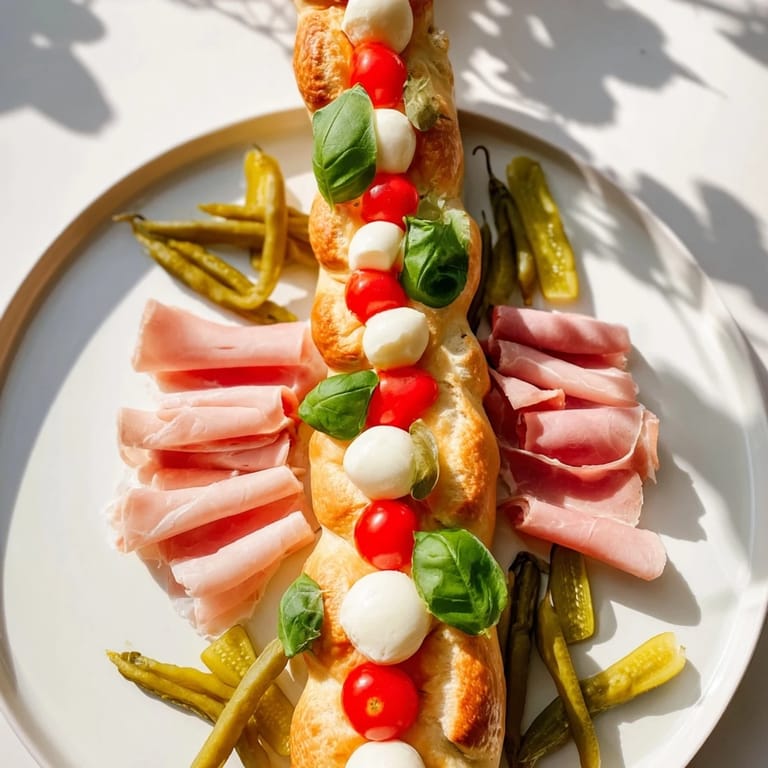
 I'll never forget the moment I discovered fractal geometry in my kitchen. It was a dinner party at my apartment, and I wanted to create something that would make guests stop mid-conversation and just stare. I was arranging cured meats and cheeses on a platter when it hit me—what if I built something that looked like nature itself? A tree with branches, each one smaller than the last, spiraling outward in perfect mathematical harmony. The Fractal Tree Branching Bread Platter was born that night, and it became the dish that taught me that the most impressive food doesn't always require cooking—just vision.
I served this for the first time at a holiday open house, and I watched my neighbor—who usually just grabs a napkin and moves on—stand there for five minutes studying the pattern before taking a piece. She asked me how long it took, and when I said twenty-five minutes, she didn't believe me. That's when I realized this platter had crossed from food into art, the kind that makes people feel special just by being invited to share it.
Ingredients
- 1 large breadstick (about 25–30 cm long): This is your anchor, your tree trunk. Choose one that's sturdy enough to stand proudly in the center without drooping. A good breadstick has enough structure to ground the whole composition.
- 6 slices prosciutto or vegetarian deli slices: These are your first major branches, the ones that catch the eye. Prosciutto brings a salty elegance, but quality vegetarian deli slices work beautifully and make this inclusive for everyone at the table.
- 6 mini mozzarella balls or small cheese cubes: Creamy, mild, and visually distinct. The white against the pink of the prosciutto creates that first beautiful contrast in your fractal pattern.
- 6 baby pickles or gherkins: The briny pop that makes people come back for another bite. These tiny pickles add a moment of sharpness that balances the richness of the cheese and cured meat.
- 12 cherry tomatoes, halved: Your second layer branches deserve vibrant color. These ruby halves are nature's own garnish and add a fresh, juicy element that keeps the platter from feeling too heavy.
- 12 thin cucumber slices: Crisp, cool, and grounding. Cucumbers are the quiet hero here—they provide texture contrast and help guests who might want something lighter between richer bites.
- 12 green or black olives: Choose whichever you prefer, but I find black olives create better visual depth in the pattern. They're earthy, they're classic, and they anchor the second layer.
- 18 small basil leaves: Fresh basil is your final flourish, the tiny delicate branches at the tips of the tree. These add a whisper of herbaceousness and a reminder that this is food made with love and care.
- 18 roasted red pepper strips: Sweet and slightly smoky, these thin strips catch the light beautifully and add another layer of color that makes the whole thing sing.
- 18 small crackers or crostini: These are your finest branches, the ones that taper the composition toward its natural conclusion. They add crunch and give guests something to build on if they want to create little bites.
Tired of Takeout? 🥡
Get 10 meals you can make faster than delivery arrives. Seriously.
One email. No spam. Unsubscribe anytime.
Instructions
- Set the stage with your trunk:
- Place the breadstick lengthwise down the center of your large platter. This is your anchor point, your foundation. Step back and admire it for a moment—this simple placement is the beginning of something beautiful.
- Create the largest branches:
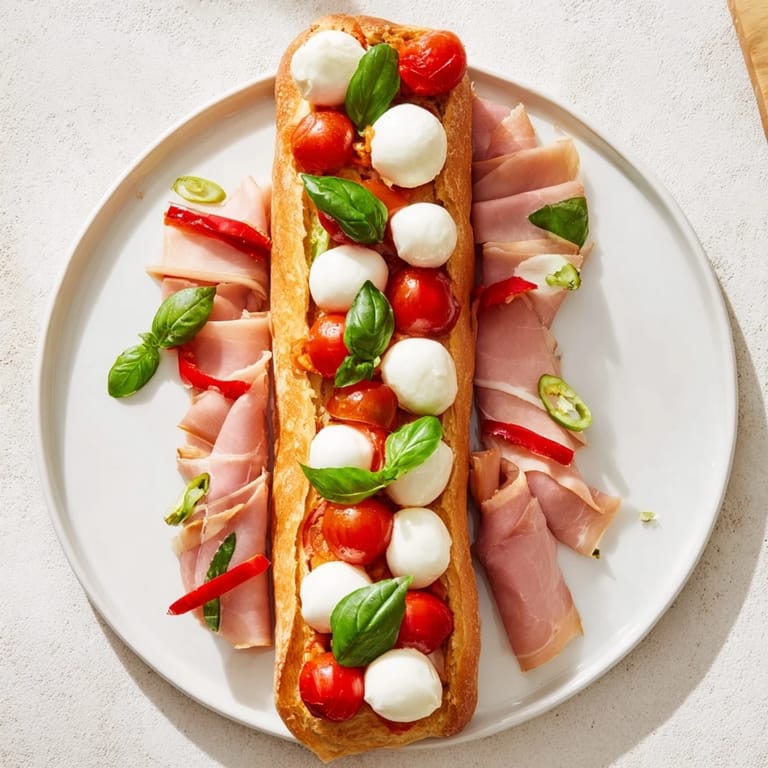
- Starting from one end of the breadstick, arrange your prosciutto slices, mozzarella balls, and baby pickles in symmetrical pairs radiating outward, almost like branches growing from a tree trunk. Think of how nature branches—never perfectly straight, but there's a logic to it. Create maybe three sets of these pairs going down one side, then mirror them on the other side. The key is to think in pairs; it creates visual harmony.
- Build the second layer:
- Now take your cherry tomato halves, cucumber slices, and olives. These go between and beyond your first branches, creating a denser second layer. Imagine the branches of a real tree getting smaller as they extend outward. Your tomatoes and cucumbers should be positioned so they nestle into the spaces created by the larger items, continuing that radiating, branching pattern. This is where the fractal magic really starts to happen.
- Complete the smallest branches:
- This is the finesse work, and it's actually quite meditative. Tuck your basil leaves, roasted red pepper strips, and small crackers into the outer reaches of the arrangement. These tiny elements should taper and thin out as they move away from the center, creating that natural fractal tree feeling. Place them with intention—each leaf and strip should feel like it belongs.
- Perfect the composition:
- Step back and look at the whole thing. Are the branches evenly spaced? Does each layer feel like a natural progression from the one before it? Adjust spacing as needed. Sometimes a small gap between elements can actually enhance the overall pattern rather than detract from it. Trust your eye.
- Finishing touches and service:
- If you're doing it, drizzle lightly with olive oil and give it a crack of fresh pepper. Bring it to the table and invite your guests to pick pieces from the branches like they're harvesting fruit from a tree. There's something joyful about that interactive element.
 Pin It
 Last spring, I brought this platter to a potluck where I knew exactly three people, and I was nervous. Within minutes, someone asked for the recipe. Then someone else. Then a third person. By the end of the night, four people had their phones out, snapping photos. One woman told me it was the most beautiful thing she'd ever seen served on a platter, and she meant it. That's when I understood that this dish isn't just about taste or even technique—it's about creating a moment where food becomes memorable because it speaks to something deeper in us about beauty and care.
The Art of the Fractal
Fractals are patterns that repeat at different scales, and once you see them in your platter, you'll see them everywhere in nature. A broccoli head is a fractal. A coastline is a fractal. Your platter, when done right, is a fractal too. The beauty of working with this concept in food is that it doesn't require precision—it requires intention. You're not trying to create a perfect mathematical model; you're creating something that feels natural and balanced. The arrangement will teach you to see your ingredients differently, to think about how they relate to each other spatially. It's a small meditation on order and beauty, and it happens to be delicious.
Making It Your Own
This platter is a canvas, and you're the artist. Don't feel locked into the specific ingredients listed. Have sun-dried tomatoes instead of roasted red peppers? Use them. Want to add marinated artichokes? They fit perfectly into the outer branches. For vegetarian guests, simply replace the prosciutto with grilled zucchini, roasted mushrooms, or additional cheese varieties. The fractal pattern works with whatever you choose—the principle remains the same: start with substantial elements and taper toward delicate ones as you move outward. The architecture is what matters, not the specific ingredients you use to build it.
Pairing and Serving Suggestions
Serve this platter with a crisp dry white wine or, if you prefer non-alcoholic, sparkling water with a twist of lemon. The acidity and bubbles cut through the richness of the cheese and cured meats beautifully. The platter itself is the star, so keep table settings simple—white plates, simple napkins, nothing that competes for attention. Present it as you would present art, because that's what this is. Invite your guests to participate in the experience by picking pieces directly from the arrangement, turning what could have been a static appetizer into an interactive moment of connection.
- A light aperitif wine pairs perfectly and keeps the meal feeling elegant without being formal.
- Arrange this platter no more than 30 minutes before serving to keep the breadstick crispy and the vegetables fresh.
- If you're making this for a large gathering, consider making two smaller platters instead of one enormous one—they're easier to serve and photograph better.
 Pin It
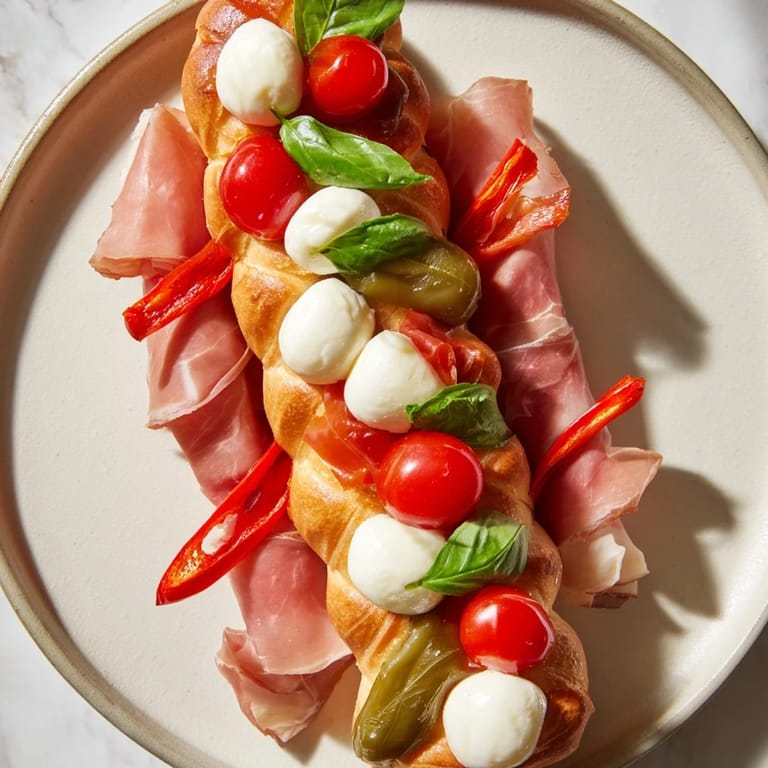
 This platter is a reminder that the best entertaining doesn't require hours in the kitchen—it requires seeing your ingredients with imagination and treating your guests like they deserve something special. That's the real recipe here.
Recipe FAQs
- → How should the ingredients be arranged?
Start with the breadstick at center, then radiate largest branches with meats and cheeses outward, followed by medium layers of vegetables, and finish with small herbs and crackers at the edges to mimic fractal branching.
- → Can this be adapted for vegetarians?
Yes, substitute prosciutto with additional cheeses or grilled vegetables to maintain layers while keeping it vegetarian-friendly.
- → What are good drink pairings?
Dry white wines or sparkling water complement the variety of flavors without overpowering the platter.
- → How to keep the platter fresh?
Arrange the ingredients shortly before serving to preserve freshness and crispness, especially for vegetables and herbs.
- → Are there allergen considerations?
The breadstick contains gluten and dairy appears in cheeses; options for gluten-free or dairy-free can be used by substituting appropriate products.