 Pin It
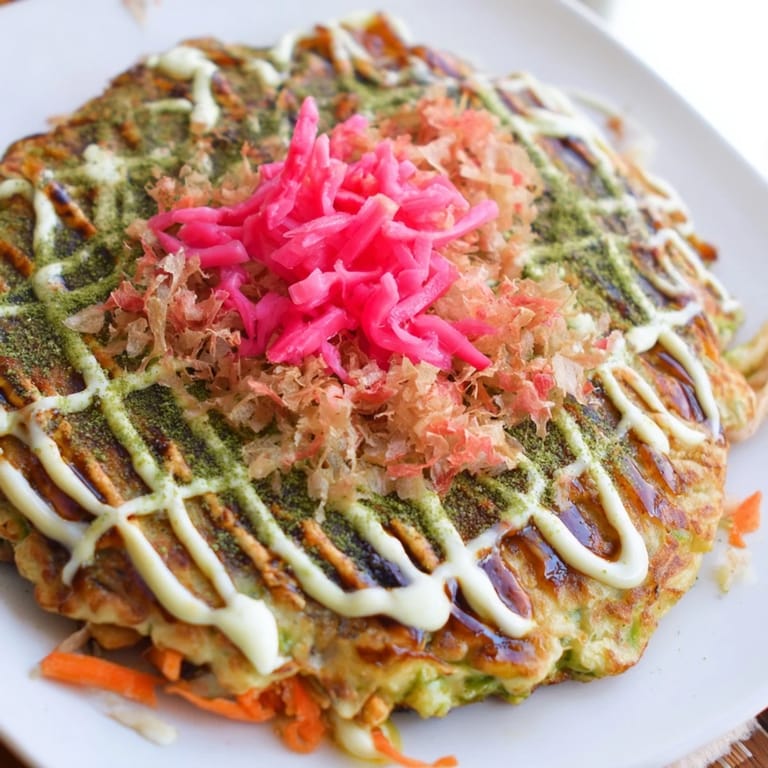
 Japanese Okonomiyaki brings the vibrant flavors of Osaka street food right into your kitchen. These savory cabbage pancakes, whose name literally means "how you like" or "what you want," are a beloved comfort food throughout Japan. The magic lies in the contrast between the crisp exterior, tender cabbage-filled interior, and the irresistible combination of tangy sauce, creamy mayonnaise, and smoky bonito flakes that dance on top from the residual heat.
Pin It The beauty of okonomiyaki lies in its versatility. While the classic Hiroshima and Osaka styles have their traditional preparations, home cooks across Japan adapt the recipe to their preferences. The pancake itself is a simple batter enriched with generous amounts of shredded cabbage, creating a satisfying texture that's somewhere between a pancake and a fritter. What truly elevates this dish is the finishing touch—the signature okonomiyaki sauce, a sweet and tangy condiment that pairs perfectly with the rich mayonnaise and savory bonito flakes.
Ingredients
Tired of Takeout? 🥡
Get 10 meals you can make faster than delivery arrives. Seriously.
One email. No spam. Unsubscribe anytime.
Pancake Batter
- 1 cup all-purpose flour
- 2/3 cup dashi stock (or water)
- 2 large eggs
- 1/2 tsp salt
- 1/2 tsp baking powder
Vegetables
- 3 cups finely shredded green cabbage
- 1/4 cup green onions, thinly sliced
- 1 small carrot, julienned
- 1/2 cup bean sprouts (optional)
Proteins & Fillings
- 4 strips bacon or pork belly, halved (optional)
- 1/2 cup cooked shrimp, chopped (optional)
Toppings
- 1/4 cup okonomiyaki sauce (store-bought or homemade)
- 1/4 cup Japanese mayonnaise
- 1/4 cup bonito flakes (katsuobushi)
- 2 tbsp aonori (dried seaweed flakes)
- 2 tbsp pickled ginger (beni shoga)
Instructions
- Step 1
- In a large bowl, whisk together flour, dashi stock, eggs, salt, and baking powder until smooth.
- Step 2
- Fold in cabbage, green onions, carrot, and bean sprouts until evenly coated. Add shrimp if using.
- Step 3
- Heat a large nonstick skillet or griddle over medium heat and lightly oil.
- Step 4
- Pour about 1/4 of the batter onto the skillet, shaping into a round pancake about 1/2-inch thick.
- Step 5
- Lay 2 bacon or pork belly halves across the top (optional).
- Step 6
- Cook for 4–5 minutes until the bottom is golden. Flip carefully and cook another 4–5 minutes until cooked through.
- Step 7
- Repeat with remaining batter.
- Step 8
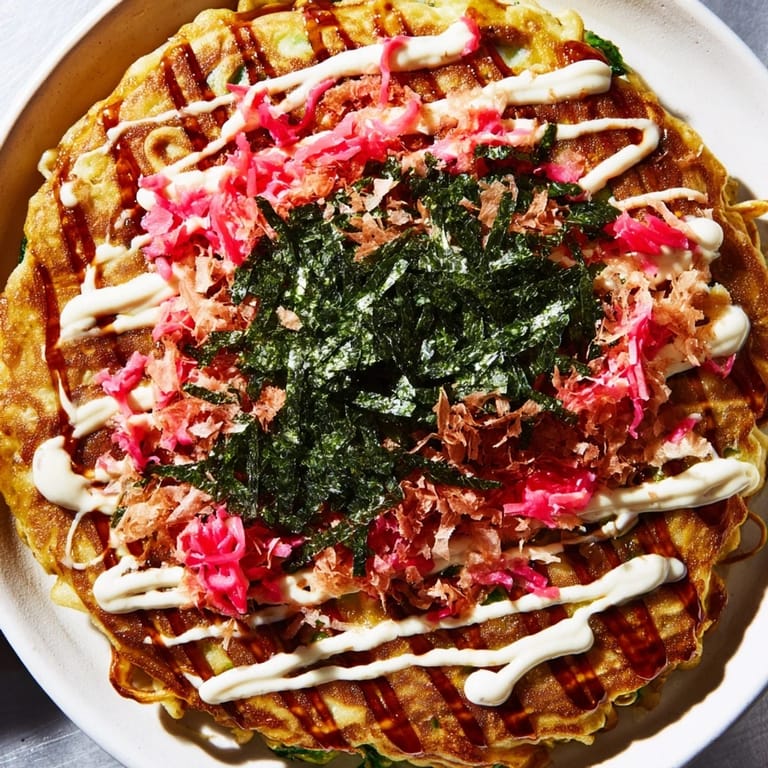
- Transfer pancakes to plates. Drizzle with okonomiyaki sauce and mayonnaise in a crisscross pattern.
- Step 9
- Sprinkle with bonito flakes, aonori, and pickled ginger. Serve immediately.
Zusatztipps für die Zubereitung
For the most authentic texture, shred your cabbage as finely as possible—this helps create that signature fluffy interior. Don't worry if the batter seems thick; the high ratio of vegetables to batter is intentional and creates the perfect texture. When flipping, use a large spatula and have confidence—a quick, decisive flip prevents the pancake from breaking. The residual heat will continue cooking the interior, so don't worry if it feels slightly soft when you remove it from the pan.
Varianten und Anpassungen
This recipe is wonderfully adaptable. For a vegetarian version, simply omit the shrimp and bacon. The okonomiyaki sauce can be substituted with a mixture of Worcestershire sauce, ketchup, and soy sauce in equal parts if you can't find the authentic version. Feel free to experiment with add-ins like corn kernels, shredded cheese, or even diced yakisoba noodles for a modern modan-yaki variation. Some regions also include tenkasu (tempura crumbs) for extra crunch.
Serviervorschläge
Okonomiyaki is traditionally served hot off the griddle, straight to your plate. The toppings are essential—don't skip the bonito flakes, which will shimmy and dance from the heat, adding visual drama and smoky umami flavor. A cold glass of sake or a light Japanese beer makes the perfect pairing, cutting through the richness of the pancake. In Japan, these are often enjoyed as casual street food or as a fun weekend meal where everyone customizes their own.
 Pin It
 Whether you're new to Japanese cuisine or a longtime enthusiast, okonomiyaki offers a perfect introduction to home-style Japanese cooking. It's forgiving, adaptable, and incredibly satisfying—exactly the kind of comfort food that brings people together. Once you master the basic technique, you'll find yourself experimenting with different combinations and making it your own. After all, that's what okonomiyaki is all about—cooking it just the way you like it.
Recipe FAQs
- → What is okonomiyaki sauce?
Okonomiyaki sauce is a tangy, slightly sweet condiment often used as a finishing touch on Japanese savory pancakes, similar to Worcestershire but thicker and richer.
- → How do I achieve fluffy pancakes?
Use a light batter with baking powder and gently fold in cabbage and vegetables without overmixing. Cooking over medium heat ensures a golden crust and soft inside.
- → Can I substitute the dashi stock?
Yes, you can use water as a substitute, but dashi adds a subtle umami depth that enhances the overall flavor.
- → What toppings complement this dish?
Traditional toppings include creamy Japanese mayonnaise, bonito flakes, dried seaweed flakes (aonori), and pickled ginger, which add layers of flavor and texture.
- → Can I make a vegetarian version?
Omit bacon, pork belly, and shrimp to keep the dish vegetarian while retaining the savory vegetable flavors.