 Pin It
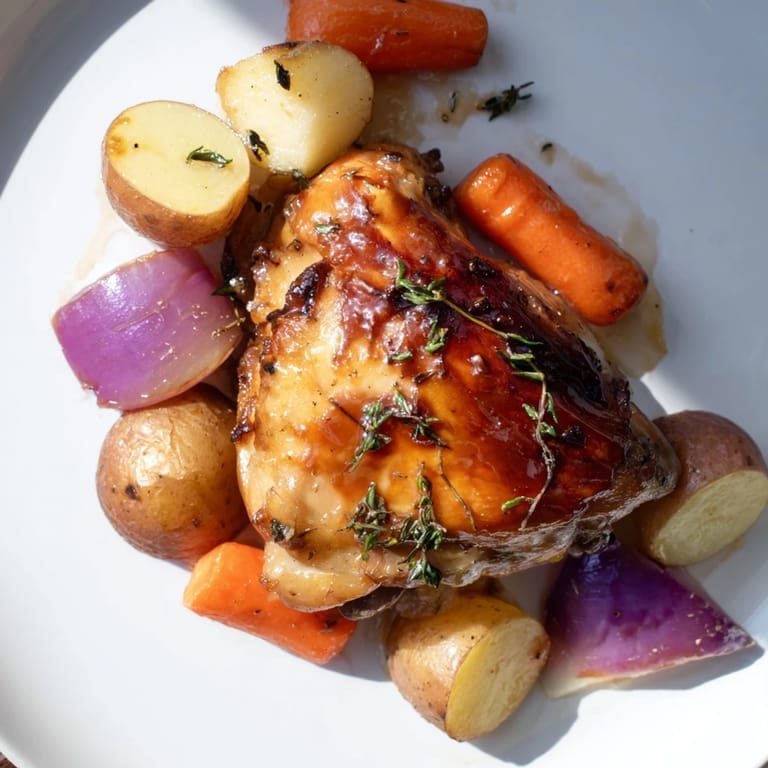
 There was an evening when I needed dinner on the table fast, nothing fancy, just something that would make the kitchen smell incredible while I tackled the day's leftover tasks. I pulled out bone-in chicken thighs because they're forgiving—they stay juicy even when you're distracted—and grabbed maple syrup from the back of the pantry. The Dijon mustard came next, and suddenly I wasn't making a weeknight meal, I was creating something with real depth.
I made this for friends who showed up unannounced on a chilly autumn afternoon, and watching them taste it—that moment when their eyes widened at the caramelized skin and the tender meat falling from the bone—I knew this was becoming a regular rotation dish. It's the kind of meal that feels special without demanding anything complicated from you.
Ingredients
- Bone-in, skin-on chicken thighs: Eight thighs give you that golden, crispy skin that shatters when you bite into it, while the bone keeps the meat ridiculously juicy; skip boneless if you can, because the difference is real.
- Kosher salt and freshly ground black pepper: These aren't afterthoughts—they're your foundation for seasoning the chicken so every bite tastes intentional.
- Pure maple syrup: The real stuff matters here; skip the pancake syrup and reach for genuine maple, which has a complexity that the fake version can't touch.
- Dijon mustard: This isn't spicy heat; it's tangy depth that plays perfectly against the sweetness of the maple.
- Olive oil and apple cider vinegar: The oil carries flavor while the vinegar adds brightness so the glaze doesn't feel cloying.
- Minced garlic and fresh thyme: These aromatics build layers—garlic melts into the glaze while thyme leaves you with little herbal pockets of flavor throughout.
- Smoked paprika: A small touch of smoke ties everything together and hints at something deeper than what you'd expect from a simple sheet pan dinner.
- Baby potatoes, carrots, and red onion: They roast until golden and tender, absorbing all that maple-Dijon goodness while they cook alongside the chicken.
Tired of Takeout? 🥡
Get 10 meals you can make faster than delivery arrives. Seriously.
One email. No spam. Unsubscribe anytime.
Instructions
- Get your oven ready and prep your stage:
- Preheat to 220°C and line your pan with parchment paper so you're not scrubbing caramelized glaze off later. This little moment of preparation saves you grief at cleanup time.
- Dry and season the chicken:
- Pat those thighs completely dry with paper towels—this is when the magic begins, because dry skin is what gives you that crackling crust. Season generously with salt and pepper on both sides.
- Build your glaze:
- Whisk together maple syrup, Dijon, olive oil, vinegar, minced garlic, thyme, and paprika in a small bowl until it looks glossy and unified. This glaze is doing all the heavy lifting flavor-wise.
- Arrange and oil your vegetables:
- Spread potatoes, carrots, and onion across the pan, drizzle with a little olive oil, season with salt and pepper, and toss until everything glistens. They need that oil to roast properly and pick up the flavor from the chicken above them.
- Nestle the chicken and brush with glaze:
- Place thighs skin-side up among the vegetables and brush each one generously with that maple-Dijon mixture, saving about 2 tablespoons for a second coat. The glaze is thick and sticky—don't be shy with it.
- First roast:
- Slide the pan into the hot oven for 30 minutes, where the chicken will start to caramelize and the vegetables will turn golden. You'll smell everything before you see it.
- Refresh the glaze and finish:
- Pull the pan out, brush each thigh with that reserved glaze, and return for another 5 to 10 minutes until the skin is deep caramel-brown and an instant-read thermometer reads 74°C in the thickest part of the meat. The second glaze coat seals in a glossy, sticky finish.
- Rest and serve:
- Let everything sit for 5 minutes so the meat relaxes and the juices redistribute. This small pause makes all the difference in how tender each bite feels.
 Pin It
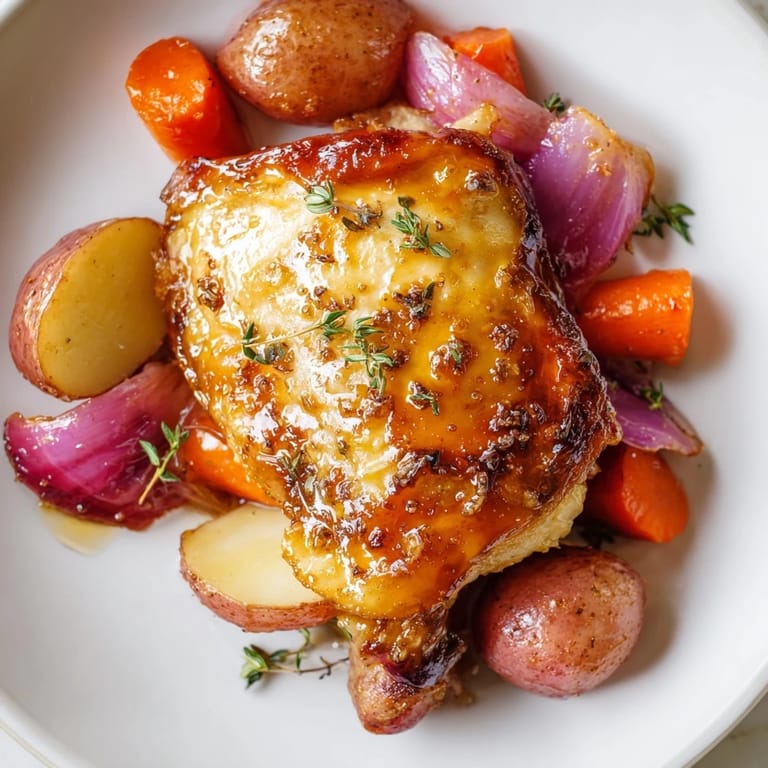
 The real moment this dish earned a permanent spot in my rotation was when my kid asked for it again the next night, which almost never happens. That's when I realized something so simple—salt, maple, mustard, and good chicken—could become a household favorite that gets requested by name.
Why Sheet Pan Dinners Win
There's something liberating about cooking everything in one place. The vegetables aren't sad and bland on a side plate; they're roasted in the same pan, catching all the drippings and glaze that fall from the chicken above them. No multiple pans, no juggling temperatures, no forgetting about something in the oven because you were focused on something else. It's honest cooking.
Customizing Your Vegetables
Potatoes, carrots, and onion are classics for a reason, but this dish is flexible enough to work with whatever vegetables are in your crisper drawer or on sale at the market. Sweet potatoes add earthiness, Brussels sprouts turn crispy and caramelized, parsnips become almost candy-like when roasted. The maple-Dijon glaze plays well with almost anything, so trust your instincts and swap freely.
Timing and Temperature
The initial 30 minutes gets the chicken most of the way there and gives the vegetables time to soften without becoming mushy. Those final 5 to 10 minutes are where the glaze sets and deepens into that beautiful caramel color that makes people stop mid-conversation to ask what you're cooking. An instant-read thermometer is your friend here—74°C in the thickest part of the thigh means done, juicy, and safe.
- If your oven runs hot, start checking around the 25-minute mark so you don't caramelize too aggressively.
- Let the chicken rest those 5 minutes so the juices stay locked inside where they belong.
- Cold leftover chicken and vegetables are secretly perfect for lunch salads the next day.
 Pin It
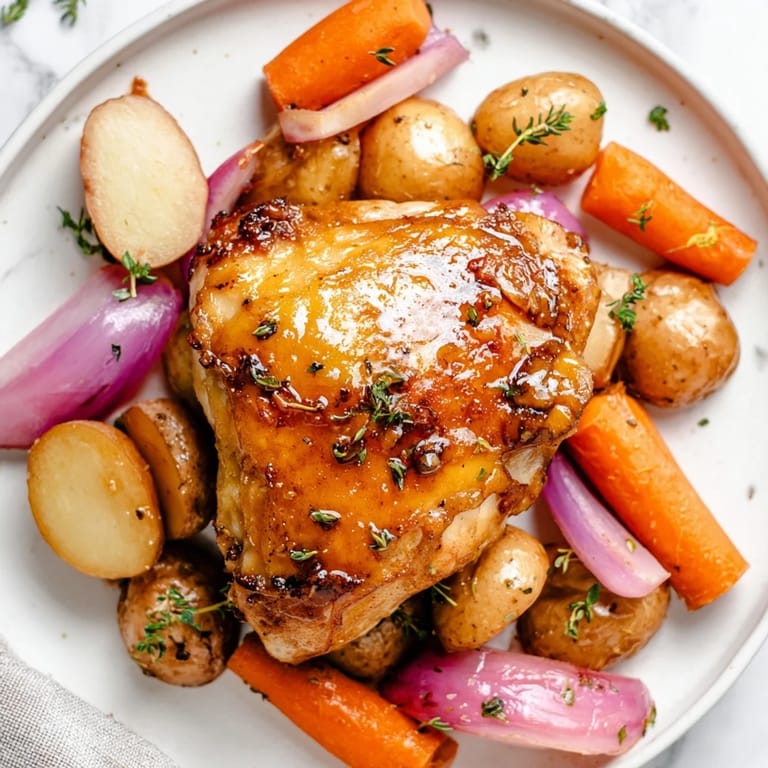
 This is the kind of dinner that tastes impressive and feels relaxed—the meal you can throw together on a Tuesday and still feel proud of serving. It's comfort food that happens to be genuinely good.
Recipe FAQs
- → What cut of chicken works best for this dish?
Bone-in, skin-on chicken thighs are ideal as they remain juicy and develop crisp skin during roasting, but boneless thighs can be used with adjusted cooking time.
- → Can I substitute the vegetables used in this dish?
Yes, sweet potatoes, parsnips, or Brussels sprouts can replace or complement the baby potatoes, carrots, and red onion based on preference.
- → How is the maple Dijon glaze prepared?
The glaze is a mix of pure maple syrup, Dijon mustard, olive oil, apple cider vinegar, minced garlic, thyme, and smoked paprika, whisked together for a sweet and tangy coating.
- → What is the best way to ensure crisp chicken skin?
Pat the chicken thighs dry before seasoning and roasting skin side up at a high temperature. Brushing with glaze partway through helps caramelize the skin further.
- → Are there recommended drink pairings for this meal?
A crisp Chardonnay or a dry Riesling pairs well, balancing the sweet and tangy flavors of the glaze.