 Pin It
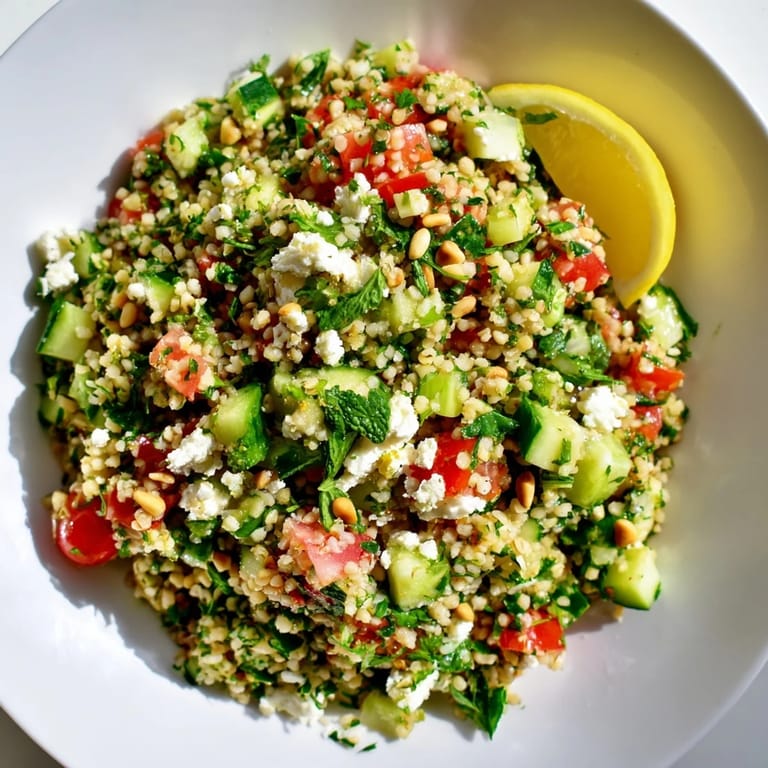
 There's something about tabbouleh that stops me mid-afternoon—a bowl so bright and alive it feels like eating sunshine. I first made this after a friend came back from Lebanon talking endlessly about the markets there, the endless bundles of parsley piled higher than her head. She described how the herb was treated like the star, not some afterthought sprinkled on top. That stuck with me, and when I finally tried making it at home, I understood: this isn't a salad you tolerate, it's one you crave on hot days when you need something that tastes like summer itself.
I made this for a potluck once where everyone brought heavy casseroles and pasta salads, and this quiet bowl of green herbs and jewel-bright tomatoes somehow became the thing that disappeared first. A woman I'd never met came back for thirds and asked for the recipe with this look on her face like I'd solved some problem she didn't know she had. That's when I realized tabbouleh isn't just food—it's a little moment of clarity on a plate.
Ingredients
- Fine bulgur wheat: Use fine, not coarse—it hydrates into tender grains instead of chewy pebbles, and the texture becomes silky against all those fresh herbs.
- Boiling water: Boiling is non-negotiable; lukewarm water leaves you with crunchy bits and regret.
- Sea salt: I learned to salt the grain base itself first—it seasons from the inside out instead of making everything taste like you sprinkled salt on top.
- Ripe tomatoes: Summer tomatoes are essential; winter ones will make you sad, so don't fight it.
- English cucumber: The seeds are minimal and the flesh stays crisp, unlike those watery grocery store varieties.
- Fresh flat-leaf parsley: This is not a garnish situation—you need a full bunch because parsley is the backbone here.
- Fresh mint: Mint brightens everything, but don't chop it until the last moment or it bruises and tastes like sadness.
- Scallions: They add a gentle onion sharpness that keeps everything from tasting one-note.
- Extra virgin olive oil: The quality matters because there's nowhere for mediocre oil to hide.
- Freshly squeezed lemon juice: Bottled tastes tinny; fresh lemon is what makes this sing.
- Garlic clove: Just one, minced fine, so it whispers rather than shouts.
- Ground black pepper: Freshly ground if you have it—pre-ground pepper tastes like dust in comparison.
- Feta cheese and pine nuts: Optional, but the feta's saltiness and the nuts' crunch transform this from side dish to main event.
Tired of Takeout? 🥡
Get 10 meals you can make faster than delivery arrives. Seriously.
One email. No spam. Unsubscribe anytime.
Instructions
- Hydrate the bulgur:
- Put the wheat and salt in a large bowl, pour the boiling water over it, cover, and set a timer for exactly 10 minutes. The grains will soften and drink up the water like they've been waiting for it all their lives. Fluff gently with a fork and let it cool—warm bulgur will wilt your herbs.
- Make the dressing:
- Whisk together the olive oil, lemon juice, minced garlic, and pepper in a small bowl until it emulsifies slightly. Taste it straight—it should make your mouth water and your face pucker just a little.
- Combine the vegetables and herbs:
- Once the bulgur is cool, add the tomatoes, cucumber, parsley, mint, and scallions. This is where you go gentle—toss just enough to combine so the herbs don't bruise into dark, sad pieces.
- Dress the bowl:
- Pour the dressing over everything and fold it together until every grain glistens. The color should deepen and the whole thing should smell like a Mediterranean dream.
- Rest and taste:
- Let it sit for 10 minutes if you have patience, which lets the flavors get to know each other. Taste and adjust—maybe it needs more salt, or maybe another squeeze of lemon.
- Serve with flair:
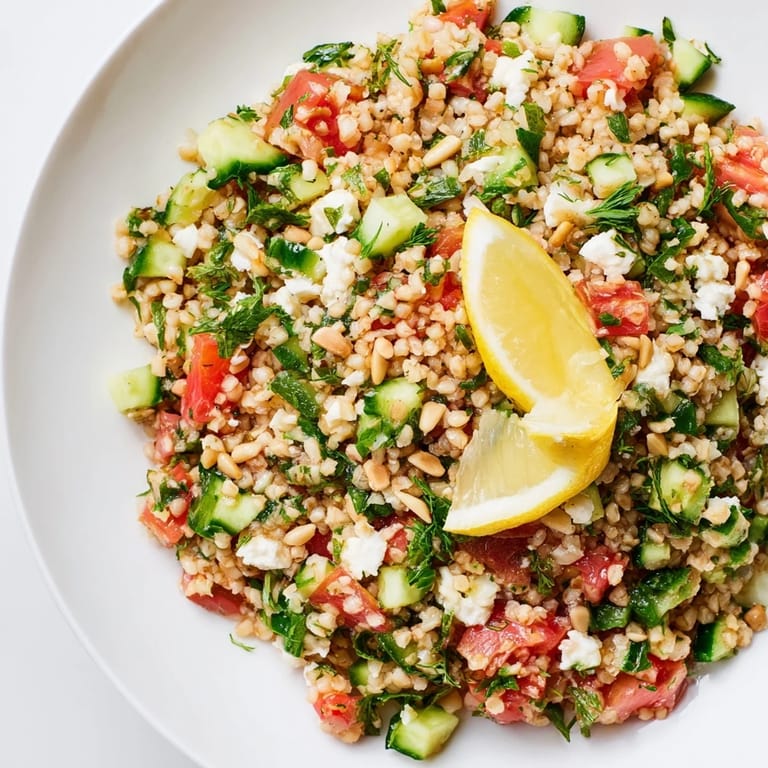
- Divide into bowls, crown with feta and pine nuts if you're using them, and add a lemon wedge so everyone can squeeze more brightness into their bowl if they want.
 Pin It
 My aunt made this for every summer gathering, and I remember her hands moving so fast through the herbs, barely looking, just knowing. When she finally taught me, she said the secret was to taste as you go and trust yourself—don't just follow measurements like they're gospel. Now when I make it, I feel her in the kitchen with me, reminding me that cooking is about feeding people you love, not proving something to a recipe.
The Magic of Fresh Herbs
This recipe hinges entirely on herbs, and I mean that literally and spiritually. The parsley does the heavy lifting—it's not trying to be delicate or supporting; it's the main character. I once made tabbouleh with wilted parsley from the back of my fridge and it was like eating wet lettuce seasoned with regret. Fresh herbs are the non-negotiable element here, the thing that separates this from being just another grain salad. Shop for them at farmers markets if you can; they're visibly happier and they'll thank you with flavor.
Storage and Make-Ahead Strategy
This is one of the rare recipes that actually improves with a night in the fridge—the flavors marry and deepen, and the bulgur absorbs the dressing so each bite is fully seasoned. I make a double batch on Sunday and eat from it all week without getting tired of it, which never happens with most salads. The only thing I hold back is the feta and pine nuts; I add those fresh right before serving so they don't get soggy and sad in the fridge.
Variations and Adaptations
Tabbouleh is forgiving in the best way—it's more of a framework than a rigid rule. I've made it with quinoa when I didn't have bulgur, added chickpeas when I wanted more protein, and once threw in some roasted beets because I had them and it was beautiful and delicious. The core is the herbs, tomatoes, and that lemon dressing; everything else is flexible. One time I added pomegranate seeds and suddenly it felt fancy enough for company, and another time I crumbled in some crispy chickpeas and it became my favorite work lunch.
- Substitute quinoa or millet if you can't eat wheat, and the texture becomes even more interesting.
- Add roasted chickpeas, grilled chicken, or crumbled tofu to make it a complete meal that actually fills you up.
- Serve alongside warm pita bread and let people build their own little bites—it becomes interactive and fun.
 Pin It
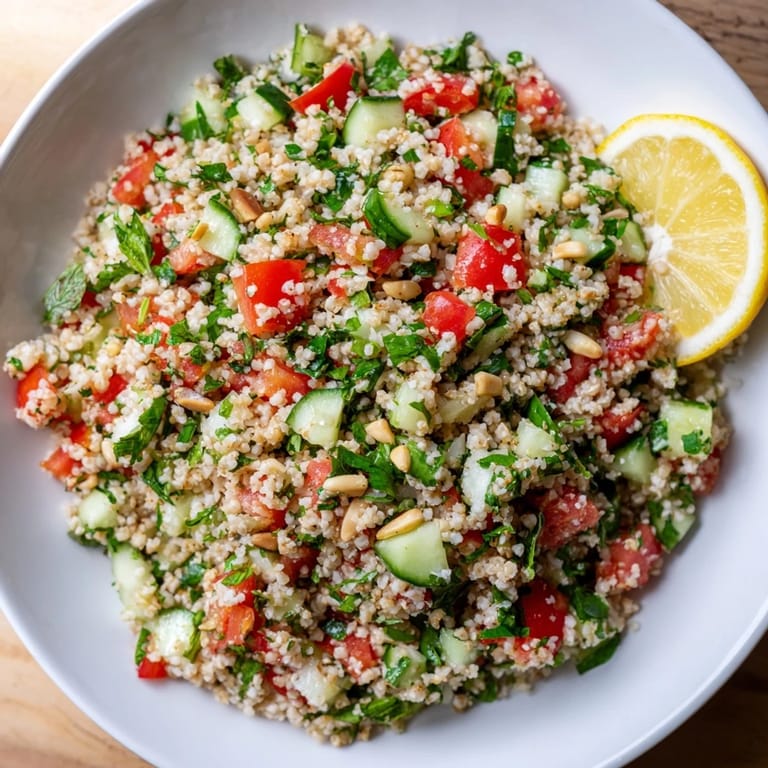
 This bowl has become my answer to almost everything—a midweek dinner that feels light but satisfying, a side dish that makes heavy mains shine, even a vegetarian main course when you're tired of regular salads. It reminds me that the simplest things done well are often the most worth doing.
Recipe FAQs
- → What grain is used as the base in this dish?
Fine bulgur wheat is soaked in boiling water until tender, forming the base of the grain bowl.
- → Can the bulgur be substituted for a gluten-free option?
Yes, cooked quinoa can be used as a gluten-free alternative to bulgur wheat.
- → How is the dressing prepared?
The dressing combines extra virgin olive oil, freshly squeezed lemon juice, minced garlic, and ground black pepper whisked together.
- → What fresh herbs are included in the dish?
Fresh flat-leaf parsley and mint leaves are finely chopped and mixed into the grain and vegetables.
- → Are there optional toppings to enhance texture and flavor?
Yes, crumbled feta cheese and toasted pine nuts can be added for creaminess and crunch, along with lemon wedges for extra brightness.
- → How long can this dish be stored?
It keeps well refrigerated for up to 2 days, allowing flavors to meld and remain fresh.