 Pin It
 The first time I made zaatar olive focaccia, I was standing in a tiny spice market in Tel Aviv, surrounded by the dusty aroma of sumac and dried herbs, when a vendor handed me a generous scoop of zaatar and said, 'This one, you make bread with.' I had no recipe, just that scoop and a vague memory of focaccia from an Italian bakery near my apartment. What emerged from my oven that afternoon was something entirely unexpected—crispy, pillowy, fragrant—and I've been chasing that moment ever since.
My friend Sarah came over one evening when I'd just pulled this from the oven, and she literally froze mid-sentence. She grabbed a warm slice before it could cool and closed her eyes like she was listening to music. That's when I realized this bread had crossed from 'good recipe' into something people actually crave.
Ingredients
- Bread flour (500 g): This is the backbone—the protein content gives focaccia its characteristic airy crumb and slight chew. I've tried all-purpose flour out of desperation once, and it flattened like a pancake.
- Active dry yeast (7 g): Dissolve it in warm water first and wait for that foamy cap to appear; it's your signal that the yeast is alive and ready to work its magic.
- Warm water (325 ml): Temperature matters more than you'd think—too hot and you'll kill the yeast, too cold and nothing happens. Aim for about 40°C, roughly the warmth of a comfortable bath.
- Extra virgin olive oil (60 ml plus 2 tbsp for topping): This isn't the place to pinch pennies on oil; the good stuff makes a noticeable difference in flavor and texture.
- Fine sea salt (1½ tsp for dough, 1 tsp flaky for topping): Salt strengthens the gluten and brings out the other flavors; flaky sea salt on top adds a satisfying crunch.
- Zaatar spice blend (2 tbsp): This herbaceous, slightly tangy blend is what makes this focaccia sing—if you can't find it, a mix of dried thyme, sumac, and sesame seeds works in a pinch.
- Kalamata olives (100 g): Halve them before baking so they distribute evenly and release their briny flavor throughout the bread.
Tired of Takeout? 🥡
Get 10 meals you can make faster than delivery arrives. Seriously.
One email. No spam. Unsubscribe anytime.
Instructions
- Bloom your yeast:
- Combine yeast and warm water in a separate bowl and let it sit for about 5 minutes—you're waiting for that frothy, yeasty head to form on top, a sign that everything's alive and ready. If it stays flat and lifeless, your yeast is dead and it's time to start over.
- Build the dough:
- Mix flour and salt, then pour in your yeast mixture and olive oil, stirring until everything comes together into a shaggy, slightly sticky mass. At this stage it'll look rough and unpromising, but don't worry.
- Knead until silky:
- Work the dough for 8–10 minutes—by hand on a floured surface or with a stand mixer—until it transforms into something smooth and springy that bounces back when you poke it. You'll feel the moment it shifts from chaotic to cooperative.
- First rise:
- Pop the dough in a lightly oiled bowl, cover it with a kitchen towel or plastic wrap, and let it sit in a warm corner of your kitchen for about an hour until it's roughly doubled in size. A warm spot near a sunny window works beautifully, or you can use your oven with just the light on.
- Shape and second rise:
- Oil your baking pan, turn out the dough, and press it gently into an even layer—you're not looking for perfection here, just something roughly rectangular and relatively flat. Cover and let it rise again for 30 minutes while the oven preheats.
- Dimple and dress:
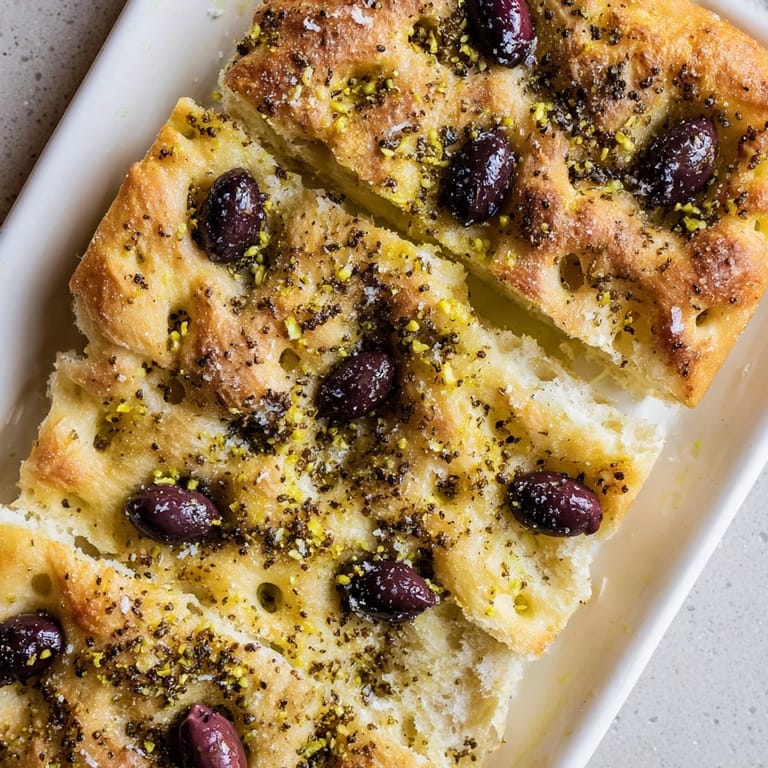
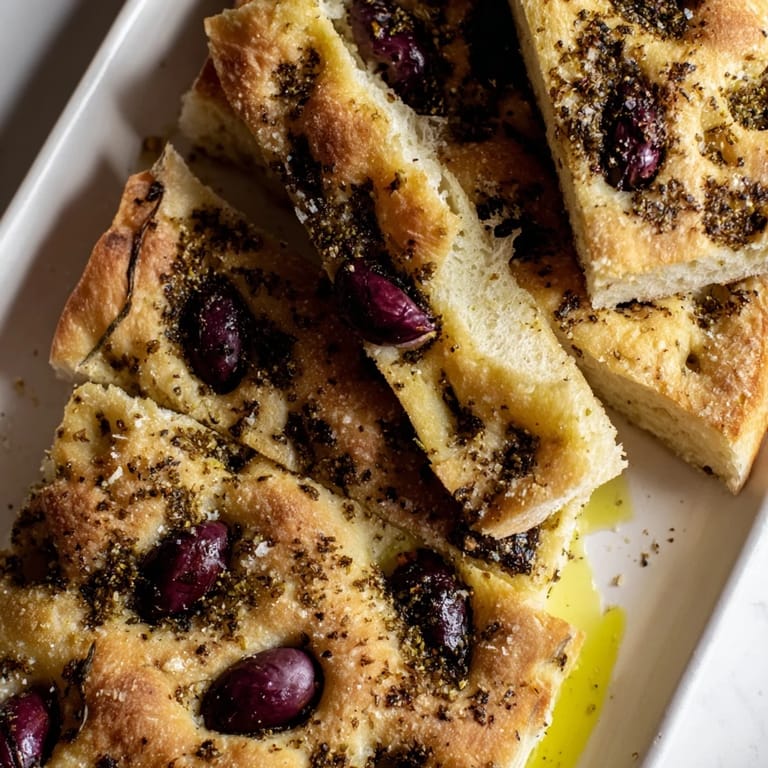
- Using your fingertips, press deep, irregular dimples all over the dough surface—these little wells are where the olive oil pools and the zaatar clings. Drizzle with olive oil, scatter zaatar across the top, then distribute your halved olives and finish with flaky sea salt.
- Bake until golden:
- Twenty to 25 minutes in a 220°C oven should give you a bread that's deep golden brown on top with crispy, slightly blistered edges. The aroma alone will make your kitchen smell like a Mediterranean bakery.
 Pin It
 There's a moment just after the focaccia comes out of the oven when the kitchen fills with this incredible warmth and smell, and everything feels somehow more alive. My neighbor has started timing her visits to coincide with my baking schedule, which is either flattering or slightly concerning—I haven't decided yet.
Getting the Temperature Right
I learned this the hard way after my yeast died in water that was too hot and ruined a whole batch. The water should feel pleasantly warm on your inner wrist—not hot enough to make you pull away. If you have a thermometer, aim for 40°C, which is about the temperature of a comfortable bath.
Why Focaccia Loves Time
Focaccia is one of those breads that actually benefits from moving slowly. The longer fermentation develops flavor in a way you can't rush, and the slow rise gives the gluten time to relax and stretch naturally. I've noticed that focaccia made with a longer rise tastes noticeably better the next day—if it lasts that long.
Variations and Serving Ideas
Once you've mastered the basic version, this dough becomes a canvas for endless creativity. I've pressed sun-dried tomatoes into the surface, scattered roasted garlic cloves across the top, or even crumbled fresh rosemary into the dimples. Serve it warm from the oven with hummus or labneh for dipping, or simply slice it and enjoy it with a drizzle of good olive oil. It's equally at home as an appetizer, a snack with afternoon tea, or a side to a big family meal.
- Try mixing fresh herbs like rosemary or thyme directly into the dough for a subtle flavor shift.
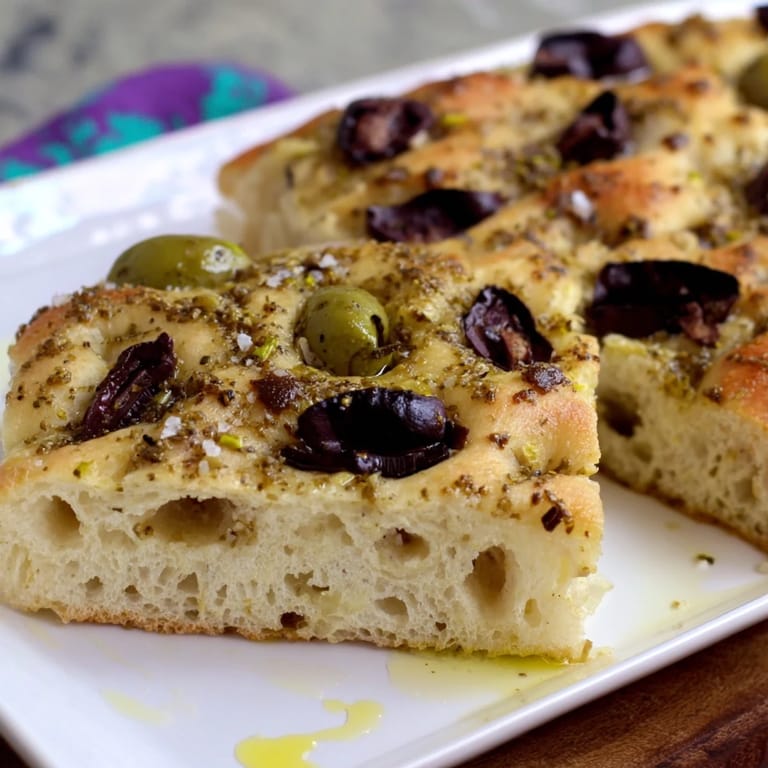
- Green olives work beautifully if you want something less briny; they add a softer, more delicate note.
- Leftover focaccia reheats perfectly in a 180°C oven for about 10 minutes—it never gets dry if you cover it loosely with foil.
 Pin It
 Focaccia has this magical quality of bringing people together—it's humble enough for a casual lunch but special enough for sharing with guests. I hope this version becomes as much a staple in your kitchen as it's become in mine.
Recipe FAQs
- → What is the best way to activate yeast for the dough?
Dissolve the dry yeast in warm water (around 40°C/104°F) and let it sit for about 5 minutes until it becomes foamy, indicating it's active and ready to use.
- → How can I ensure the focaccia crust turns crispy?
Drizzling extra virgin olive oil over the dimpled dough before baking enhances crispness, and baking at 220°C (425°F) helps develop a golden, crunchy crust.
- → Can other olives be substituted for Kalamata?
Yes, green olives offer a milder flavor and can be used as a substitute for Kalamata olives to suit different taste preferences.
- → How long should the dough rise for optimal texture?
Allow the dough to rise for about 1 hour until doubled, then after shaping, let it rise another 30 minutes to develop a light and fluffy texture.
- → What variations can enhance the flavor profile?
Adding sun-dried tomatoes or roasted garlic to the topping can deepen the savory notes, complementing the zaatar and olives nicely.