 Pin It
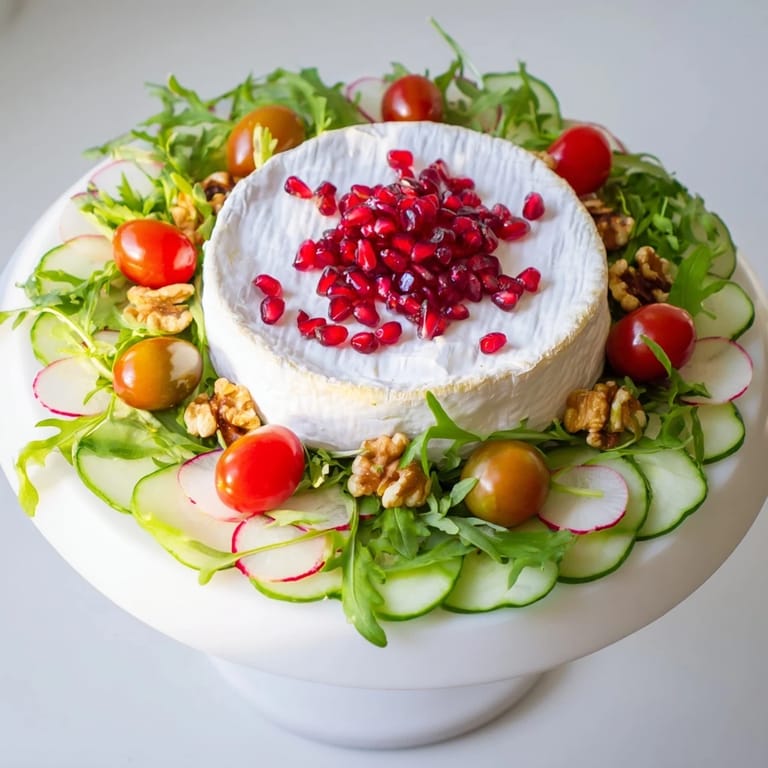
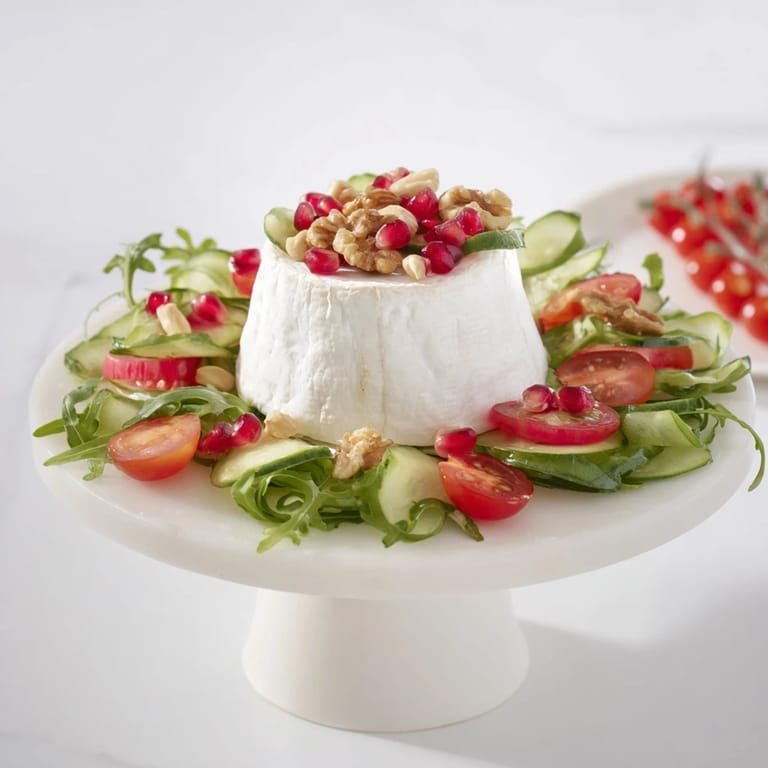
 I discovered this salad by accident during a dinner party when I couldn't decide between serving a cheese board or a proper salad. My guests were arriving in thirty minutes, and I had all these beautiful vegetables scattered across my counter alongside a perfectly ripe Saint-Marcellin wheel. Instead of choosing one or the other, I arranged everything in radiating lines toward the cheese in the center—and it became the most dramatic thing I'd ever plated. The compliments weren't just about how it tasted, but how it looked like something from a gallery opening.
The first time I made this for more than just myself, my mother-in-law walked into the kitchen and just stopped. She asked if I'd learned plating in culinary school—I laughed and told her the truth, that it was born from kitchen chaos and running late. She took a photo for her book club, and three weeks later I got a text from someone I'd never met saying their version had been a hit. That's when I realized the real beauty wasn't the arrangement, but how it invited people to slow down and actually enjoy their food together.
Ingredients
- Baby arugula: Use the smallest leaves you can find—they're peppery enough to stand up to the richness of cheese without wilting into invisibility.
- Cherry tomatoes: Halving them lets the cut sides catch light, which is surprisingly important when you're building something meant to be looked at.
- Cucumber: Slice thin enough to bend slightly without breaking, so your rows stay elegant and dimensional.
- Watermelon radish: The pale pink interior creates natural visual drama that no food coloring could fake.
- Pomegranate seeds: These are your jewels—scatter them where they'll catch light and add subtle tartness that brightens everything.
- Toasted walnuts: Toast them yourself if you can; the smell filling your kitchen somehow makes the whole dish taste better.
- Extra-virgin olive oil: This is worth spending a little more on because it's the only dressing component and it matters.
- White balsamic vinegar: It's milder and sweeter than dark balsamic, so it doesn't overpower the delicate vegetables or the cheese.
- Honey: Just a touch rounds out the acidity in a way that feels intentional rather than sweet.
- Dijon mustard: An emulsifier that makes your dressing hold together instead of separating on the plate.
- Artisanal cheese wheel: The star that everything points toward should be something soft and interesting—pick one you'd actually be excited to eat on its own.
Tired of Takeout? 🥡
Get 10 meals you can make faster than delivery arrives. Seriously.
One email. No spam. Unsubscribe anytime.
Instructions
- Position your cheese centerpiece:
- Place the cheese wheel on a small pedestal or plate slightly off-center on your large platter—this gives everything else room to radiate outward naturally. A pedestal isn't strictly necessary; even a small white plate underneath makes it feel intentional.
- Create your arugula foundation:
- Arrange the baby arugula in a sweeping arc that radiates away from the cheese, like lines of force pointing backward. Think of it as drawing with greens—loose enough to feel organic, directed enough to guide the eye.
- Layer your vegetables in rows:
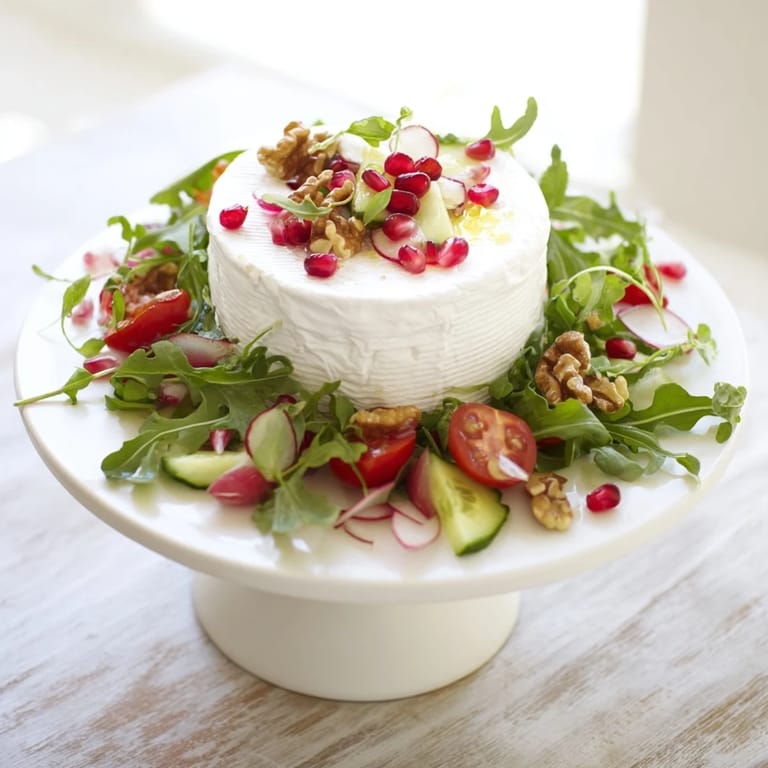
- Working outward from the cheese, lay down your cucumber slices in one orderly row, then tomato halves in another, then watermelon radish slices—each ingredient in its own stripe, all angled subtly toward the center. This is where it stops being a salad and starts being a composition.
- Scatter seeds and nuts:
- Dot pomegranate seeds and toasted walnuts throughout, keeping them part of the directional pattern rather than random. They should feel placed, not dropped.
- Make your dressing:
- Whisk together olive oil, white balsamic, honey, and mustard in a small bowl until it emulsifies into something silky. Add salt and pepper to taste—remember the cheese brings its own saltiness, so be measured.
- Dress with intention:
- Drizzle the dressing lightly across the vegetables, deliberately avoiding the cheese wheel itself. The cheese stays pure so its texture and flavor remain the focal point.
- Serve and invite participation:
- Present the finished platter and let guests cut pieces of cheese to combine with whatever vegetables call to them. This isn't about eating in a prescribed order; it's about giving people beautiful choices.
 Pin It
 I remember standing back to admire one of these platters when my young daughter asked why I was making art with food. I told her it was so people would slow down and notice what they were eating instead of just rushing through a meal. She took a photo with her phone and sent it to her friend before we'd even sat down to eat. That moment, seeing her understand that food could be beautiful and still matter—that's when I stopped apologizing for caring about how things look on a plate.
Choosing Your Cheese
Not every cheese works here, so it's worth thinking intentionally about your choice. Soft-ripened cheeses like Saint-Marcellin, Brie, or Camembert have that creamy interior that becomes almost buttery against the acidity of vinegar and tomato. A blue cheese or goat cheese round changes the entire mood—more assertive, more sophisticated, less forgiving if you're not sure about flavors. I've even used a small Humboldt Fog with the ash layer for dramatic visual contrast, and guests couldn't stop talking about how the flavors played together.
Timing and Temperature
Twenty minutes of prep time is genuine—this isn't a race once you understand the principle of radiating lines and let your hands move with purpose. The vegetables don't need cooking, just thoughtful slicing and arrangement. What takes slightly longer is fighting the urge to fuss and rearrange endlessly; at some point you have to trust that the geometry works and step away. I've learned the hard way that the moment you think it looks good is the moment you should stop touching it.
Variations and Additions
The beauty of this structure is how easily it adapts to what's in season or what you're craving. Spring versions lean toward fresh peas and asparagus tips arranged in delicate rows. Summer is all about stone fruits, berries, and fresh basil. If you want to add protein without losing the vegetarian spirit, thin slices of prosciutto or smoked salmon follow the same radiating pattern. Some people finish with edible flowers—pansies, nasturtiums, or borage flowers scattered like final brushstrokes. The shape stays true; only the ingredients change with the season.
- Try different cheeses to completely change the flavor personality without changing the structure.
- Add prosciutto or smoked salmon by laying thin slices along the radiating lines for a non-vegetarian version.
- Scatter edible flowers across the finished platter for additional visual drama and a delicate floral note.
 Pin It
 This salad taught me that the most impressive food isn't about complexity or exotic ingredients—it's about paying attention to beauty and balance. Every time I make it, someone asks for the recipe, and I realize they're asking for permission to slow down and care about how their plate looks when they serve people they love.
Recipe FAQs
- → What kinds of cheese work best for the centerpiece?
Soft-ripened cheeses like Saint-Marcellin, Brie, Camembert, or Humboldt Fog add creamy richness and pair well with fresh produce.
- → Can I add protein options to this dish?
Thinly sliced prosciutto or smoked salmon can be added for a non-vegetarian variation that complements the salad’s flavor.
- → How should the salad dressing be prepared?
Whisk together extra-virgin olive oil, white balsamic vinegar, honey, Dijon mustard, salt, and pepper, then drizzle lightly over the salad.
- → What nuts are recommended for this salad?
Toasted walnuts add a pleasant crunch and earthy flavor, balancing the freshness of the veggies and creaminess of the cheese.
- → Are there any pairing suggestions to enhance this dish?
A chilled Sauvignon Blanc or a dry rosé pairs beautifully with the fresh and creamy elements present in this salad.