 Pin It
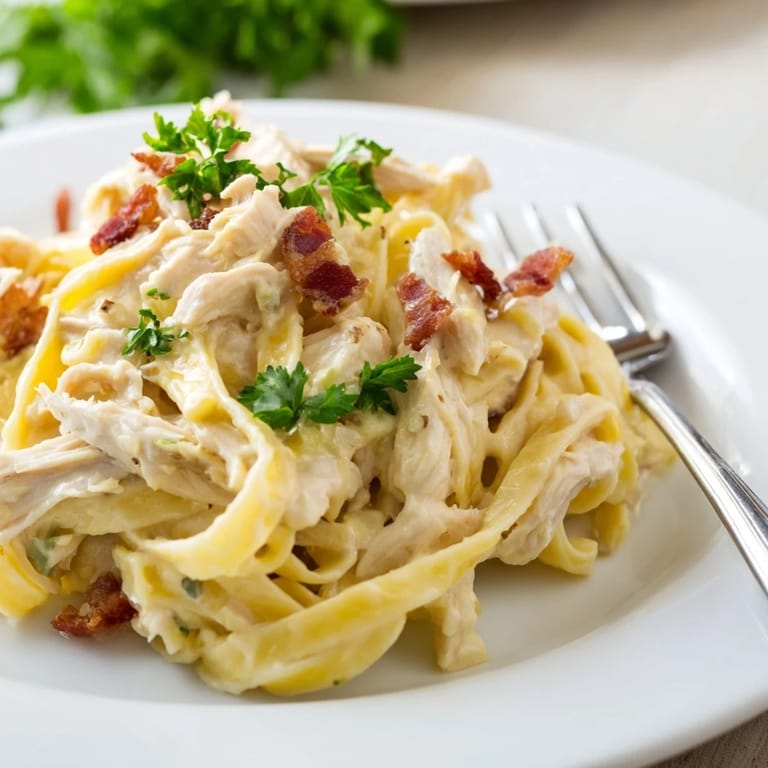
 My teenage nephew once told me carbonara was "just fancy mac and cheese with bacon," and honestly, he wasn't entirely wrong. The difference is in the technique: that glossy, silky sauce that clings to every strand of pasta without a hint of scrambled egg. I learned this dish after a friend returned from Rome and raved about the real thing, but I wanted something heartier for weeknight dinners. Adding shredded chicken turned it into a full meal that feels indulgent without requiring reservations.
I made this for my parents on a random Tuesday, and my dad, who usually critiques everything, went silent after the first bite. He looked up and said, "This is what I imagine Italians eat when they don't want to impress anyone, just feed their souls." That might be the highest compliment he's ever given my cooking. Since then, it's become my go-to when I need to feel like I have my life together, even if the kitchen's a mess.
Ingredients
- Spaghetti or fettuccine: Use whatever pasta shape makes you happy, though long noodles let the sauce coat every bite. I always cook a bit extra because someone inevitably asks for seconds.
- Cooked chicken breast, shredded: Rotisserie chicken is my secret weapon here; it saves time and adds a subtle roasted flavor. Shred it by hand for texture that grips the sauce better than knife-cut chunks.
- Bacon or pancetta, diced: Pancetta is traditional and less smoky, but thick-cut bacon adds a salty crunch that I crave. Render it slowly so the fat becomes the flavor base for everything else.
- Large eggs: Room temperature eggs blend more smoothly into the sauce and are less likely to scramble. I learned this after one too many clumpy disasters.
- Grated Parmesan cheese: Freshly grated melts seamlessly, while pre-shredded can turn grainy. Parmigiano-Reggiano is worth the splurge if you can find it.
- Heavy cream (optional): This is my cheat for a richer, more forgiving sauce when I'm cooking for people who get nervous about raw eggs. Purists skip it, but I like the insurance.
- Salt and black pepper: Carbonara lives and dies by the pepper; use more than you think you need. The pasta water adds salt, so go easy at first.
- Garlic, finely chopped: Just enough to perfume the bacon fat without overpowering the delicate egg sauce. Burnt garlic will ruin everything, so watch it closely.
- Extra Parmesan and parsley for garnish: The final sprinkle of cheese adds a salty punch, and parsley makes it look like you tried. Both are optional but appreciated.
Tired of Takeout? 🥡
Get 10 meals you can make faster than delivery arrives. Seriously.
One email. No spam. Unsubscribe anytime.
Instructions
- Boil the pasta:
- Cook your spaghetti in generously salted water until it still has a slight bite, then save at least half a cup of that starchy water before draining. That cloudy liquid is liquid gold for binding the sauce later.
- Crisp the bacon and aromatics:
- Let the bacon sizzle in a dry skillet until the edges curl and the fat renders out, then toss in the garlic just long enough to make your kitchen smell amazing. Stir in the shredded chicken to warm it through, then pull the pan off the heat to avoid scrambling the eggs later.
- Whisk the egg mixture:
- Beat the eggs, Parmesan, cream if using, and a heavy hand of black pepper until smooth and pale. This is your sauce base, so make sure there are no streaks of egg white floating around.
- Combine pasta with bacon and chicken:
- Toss the hot, drained pasta directly into the skillet with the bacon and chicken, letting the residual heat and fat coat every strand. Work quickly so the pasta stays hot enough to gently cook the eggs in the next step.
- Create the creamy sauce:
- Off the heat, pour the egg mixture over the pasta and toss constantly with tongs, adding splashes of reserved pasta water until the sauce turns glossy and clings without pooling. The motion and starch work together to emulsify everything into silk.
- Serve immediately:
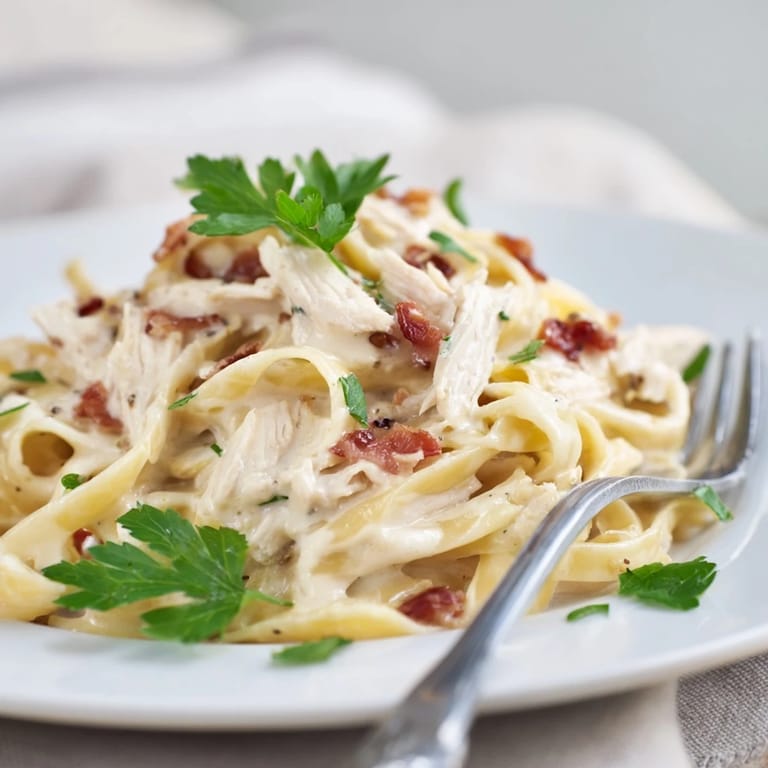
- Plate it fast while it's still steaming, then shower each serving with extra Parmesan and parsley. Carbonara waits for no one; it's best eaten the second it's ready.
 Pin It
 One night, I served this to a friend who swore she hated "fancy pasta," and she scraped her plate clean without saying a word. Later, she texted me asking for the recipe and admitted she'd been eating it wrong her whole life. That's when I realized this dish doesn't just feed people; it changes their minds about what comfort food can be.
Choosing Your Pasta
Long, thin noodles like spaghetti or fettuccine are classic because they twirl beautifully and hold the sauce in every bite. I've tried this with penne in a pinch, and while it works, the sauce pools in the tubes instead of clinging to the surface. Fresh pasta cooks faster and has a tender bite, but dried pasta gives you more control over timing and is easier to keep al dente.
Making It Lighter
Swap turkey bacon for regular bacon and skip the cream entirely if you want to cut calories without losing flavor. I've also used half the Parmesan and bulked up the chicken, which still tastes indulgent but leaves you feeling less heavy afterward. Whole wheat pasta adds a nutty flavor that surprisingly works here, though it does change the texture slightly.
Storing and Reheating
Carbonara is best fresh, but leftovers can be saved in an airtight container in the fridge for up to two days. Reheat gently in a skillet over low heat with a splash of milk or cream, stirring constantly to revive the sauce. The microwave works in a pinch, but expect the texture to be a bit drier and less silky.
- Add a drizzle of olive oil before reheating to prevent clumping.
- Never freeze carbonara; the eggs separate and turn grainy when thawed.
- If the sauce breaks, whisk in a little warm milk to bring it back together.
 Pin It
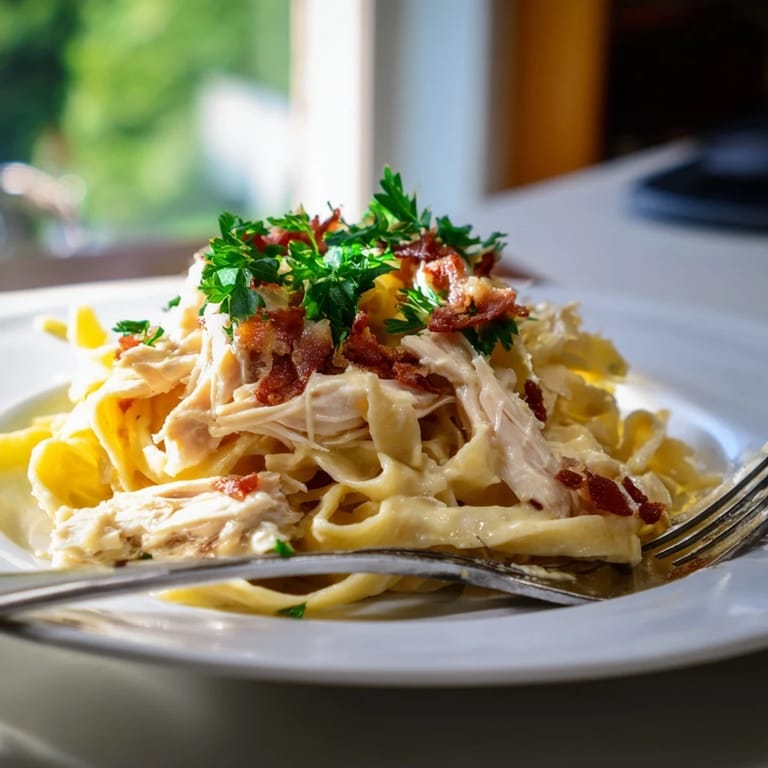
 This dish taught me that comfort doesn't have to be complicated, just thoughtful. Every time I make it, I'm reminded that the best meals come from knowing when to break the rules and when to respect them.
Recipe FAQs
- → How do I prevent the eggs from scrambling in carbonara?
Remove the skillet from heat before adding the egg mixture. Toss the hot pasta quickly and continuously with the eggs off the heat, allowing residual warmth to create a creamy sauce. The reserved pasta water helps regulate temperature and prevent curdling.
- → Can I use cream in carbonara?
Traditional carbonara uses only eggs, but adding optional cream provides extra creaminess and insurance against scrambling. This variation is common in modern kitchens and still delivers delicious results.
- → What's the best pasta shape for carbonara?
Spaghetti and fettuccine are ideal choices, as their surface area holds the sauce beautifully. Other long, flat pasta shapes work well too. Avoid short pasta shapes that don't coat evenly with the sauce.
- → Can I substitute the bacon?
Absolutely. Use pancetta for authenticity, turkey bacon for a lighter version, or guanciale for traditional Italian carbonara. Each adds distinct flavor while maintaining the dish's character.
- → Why is reserved pasta water important?
Pasta water contains starch that helps emulsify the sauce, creating a silky coating on the pasta. Adding it gradually lets you achieve your desired sauce consistency while keeping everything creamy and cohesive.
- → How do I make this dairy-free?
Omit cream and Parmesan, then substitute with dairy-free alternatives. Use nutritional yeast for umami depth and ensure eggs are still cooked gently off the heat for that signature creamy texture.