 Pin It
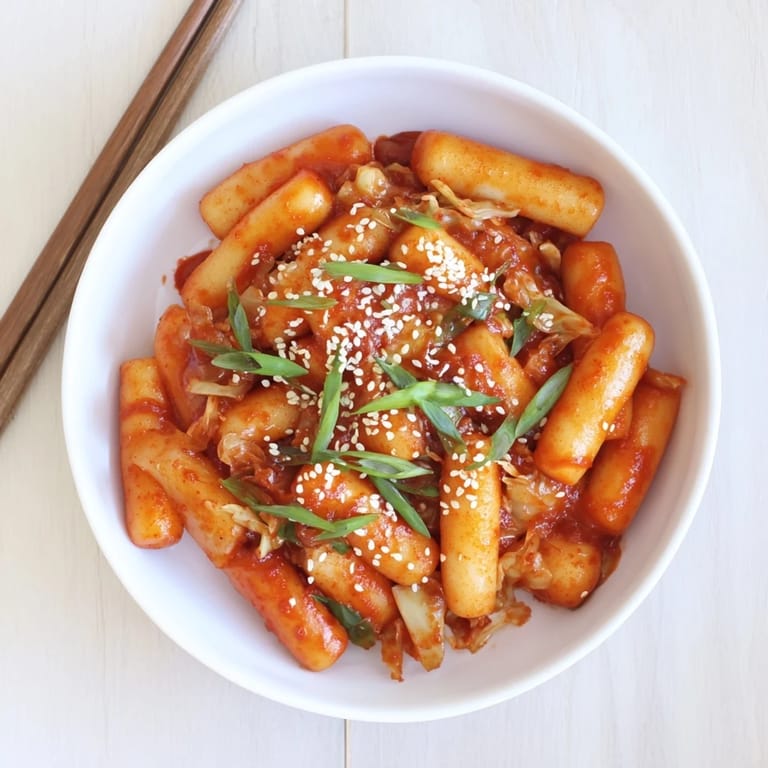
 Korean Tteokbokki is a beloved street food that captures the essence of Korean culinary tradition. These chewy rice cakes, known as tteok, simmer to perfection in a vibrant gochujang-based sauce that strikes the perfect balance between spicy, sweet, and savory. The dish warms you from the inside out, with each rice cake soaking up the rich, aromatic sauce while maintaining its signature springy texture. Fresh green onions add a burst of color and mild sweetness that perfectly complements the bold flavors of the chili glaze. Whether you're enjoying it as a comforting meal at home or recreating the bustling street food experience, this Korean classic delivers an unforgettable taste of Seoul's vibrant food culture.
Pin It The magic of Tteokbokki lies in its simplicity and the quality of its ingredients. The foundation is a well-balanced sauce made with gochujang, Korean chili paste that lends its deep red color and complex fermented flavor. Combined with gochugaru (chili flakes) for additional heat, soy sauce for savory depth, and just the right amount of sweetness from sugar and honey, this sauce transforms plain rice cakes into something extraordinary. The traditional anchovy-kelp broth adds umami richness, though it can be omitted for a vegetarian version that doesn't compromise on flavor.
Ingredients
Tired of Takeout? 🥡
Get 10 meals you can make faster than delivery arrives. Seriously.
One email. No spam. Unsubscribe anytime.
- Rice Cakes: 500 g Korean rice cakes (tteok, cylindrical), 1 L water
- Sauce: 3 tbsp gochujang (Korean chili paste), 1 tbsp gochugaru (Korean chili flakes), 2 tbsp soy sauce, 1 tbsp sugar, 1 tbsp honey (or corn syrup), 2 cloves garlic, minced
- Broth: 3 cups water, 1 dried kelp (kombu), 8 x 8 cm, 4 dried anchovies, heads and guts removed (optional for vegetarian)
- Vegetables & Garnish: 2 green onions, sliced diagonally, 1 small onion, sliced, 1/2 cup cabbage, chopped (optional), 2 boiled eggs, peeled (optional), 1 tbsp sesame seeds
Instructions
- Step 1: Prepare the Rice Cakes
- Soak the rice cakes in warm water for 10 minutes if they are hard or refrigerated. This ensures they become tender and chewy during cooking.
- Step 2: Make the Broth
- In a medium pot, combine 3 cups water, kelp, and anchovies (if using). Bring to a simmer and cook for 10 minutes. Remove kelp and anchovies, reserving the flavorful broth.
- Step 3: Create the Sauce Base
- Add gochujang, gochugaru, soy sauce, sugar, honey, and minced garlic to the broth. Stir to dissolve the paste completely, creating a smooth, well-combined sauce.
- Step 4: Add Main Ingredients
- Add rice cakes, onion, and cabbage (if using) to the pot. Bring to a gentle boil, stirring occasionally to prevent the rice cakes from sticking to the bottom.
- Step 5: Simmer to Perfection
- Simmer for 10–15 minutes, or until the sauce thickens to a glossy consistency and the rice cakes are soft and chewy throughout.
- Step 6: Finish with Fresh Elements
- Add green onions and boiled eggs (if using) in the last 2 minutes of cooking, allowing them to heat through while retaining their texture.
- Step 7: Serve and Garnish
- Transfer to a serving platter. Sprinkle with sesame seeds and serve hot while the rice cakes are at their most tender and the sauce is at its most flavorful.
Zusatztipps für die Zubereitung
For the most authentic flavor, use traditional Korean ingredients like gochujang and gochugaru, which can be found in Asian grocery stores or online. The key to perfectly cooked rice cakes is maintaining a gentle simmer—boiling too vigorously can cause them to become mushy or break apart. Stir frequently but gently to ensure even cooking and prevent sticking. If the sauce becomes too thick before the rice cakes are fully tender, add a splash of water to maintain the right consistency.
Varianten und Anpassungen
This versatile dish welcomes many variations. For extra protein and texture, add fish cakes (eomuk) sliced into strips along with the rice cakes. Make it vegetarian by omitting anchovies and using only kelp for the broth, or create a vegan version by using vegetable broth and skipping the boiled eggs. Adjust the spiciness by increasing or decreasing the amount of gochugaru, or add a drizzle of sesame oil for additional nutty flavor. For a heartier meal, consider adding ramen noodles or dumplings during the last few minutes of cooking.
Serviervorschläge
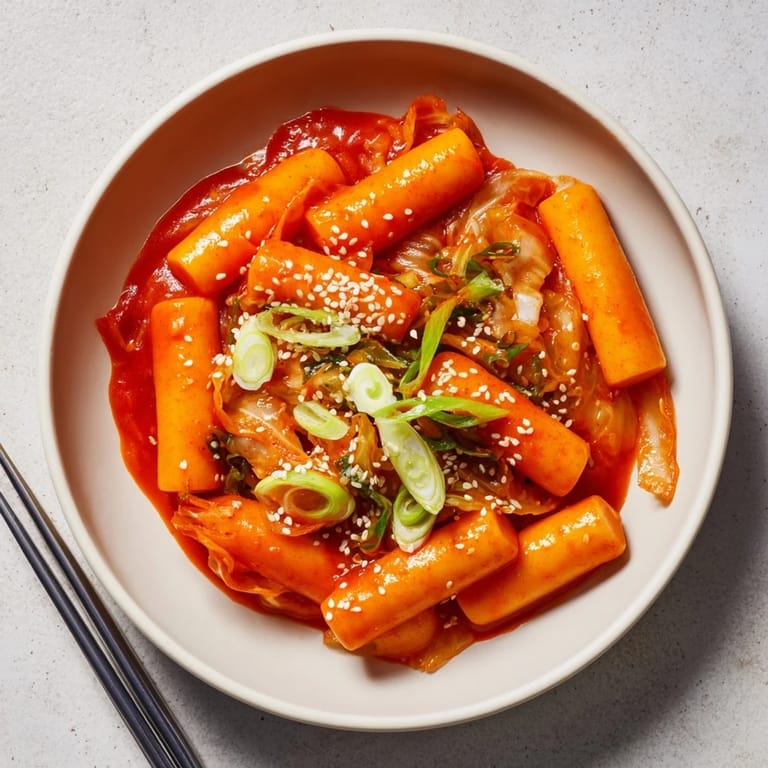
Tteokbokki is traditionally served piping hot in the cooking pot or transferred to a shallow serving bowl. Garnish generously with sesame seeds for nutty crunch and fresh green onions for color and mild flavor. Complete the meal with classic Korean sides: pickled radish (danmuji) provides a refreshing contrast to the spice, while steamed dumplings (mandu) or a simple cucumber salad round out the experience. For an authentic street food experience, serve in individual portions with toothpicks or small forks for easy sharing.
 Pin It
 Korean Tteokbokki represents everything wonderful about Korean home cooking and street food culture. Its straightforward preparation belies the complex, layered flavors that develop during cooking. This dish brings people together, whether shared at a bustling street food stall in Seoul or enjoyed as a comforting weeknight dinner at home. The combination of chewy rice cakes, aromatic sauce, and fresh garnishes creates a satisfying meal that's both nourishing and deeply flavorful. Once you master this classic recipe, you'll find yourself returning to it again and again, creating your own variations and making it uniquely yours.
Recipe FAQs
- → What is the best way to soften rice cakes before cooking?
Soaking the rice cakes in warm water for about 10 minutes helps soften them, especially if they are hard or refrigerated.
- → Can I make the dish vegetarian?
Yes, by omitting dried anchovies and using kelp (kombu) broth, the dish can be prepared vegetarian-friendly.
- → How can I adjust the spiciness level?
Modify the amount of gochugaru (Korean chili flakes) used to suit your preferred heat intensity.
- → What additional ingredients can enhance flavor or texture?
Adding fish cakes or boiled eggs can provide extra richness and variety in texture.
- → What sides pair well with this dish?
Pickled radish or steamed dumplings complement the flavors and make the meal more complete.
- → How long should the sauce be simmered?
Simmer the sauce for 10–15 minutes until it thickens and the rice cakes become soft and chewy.